
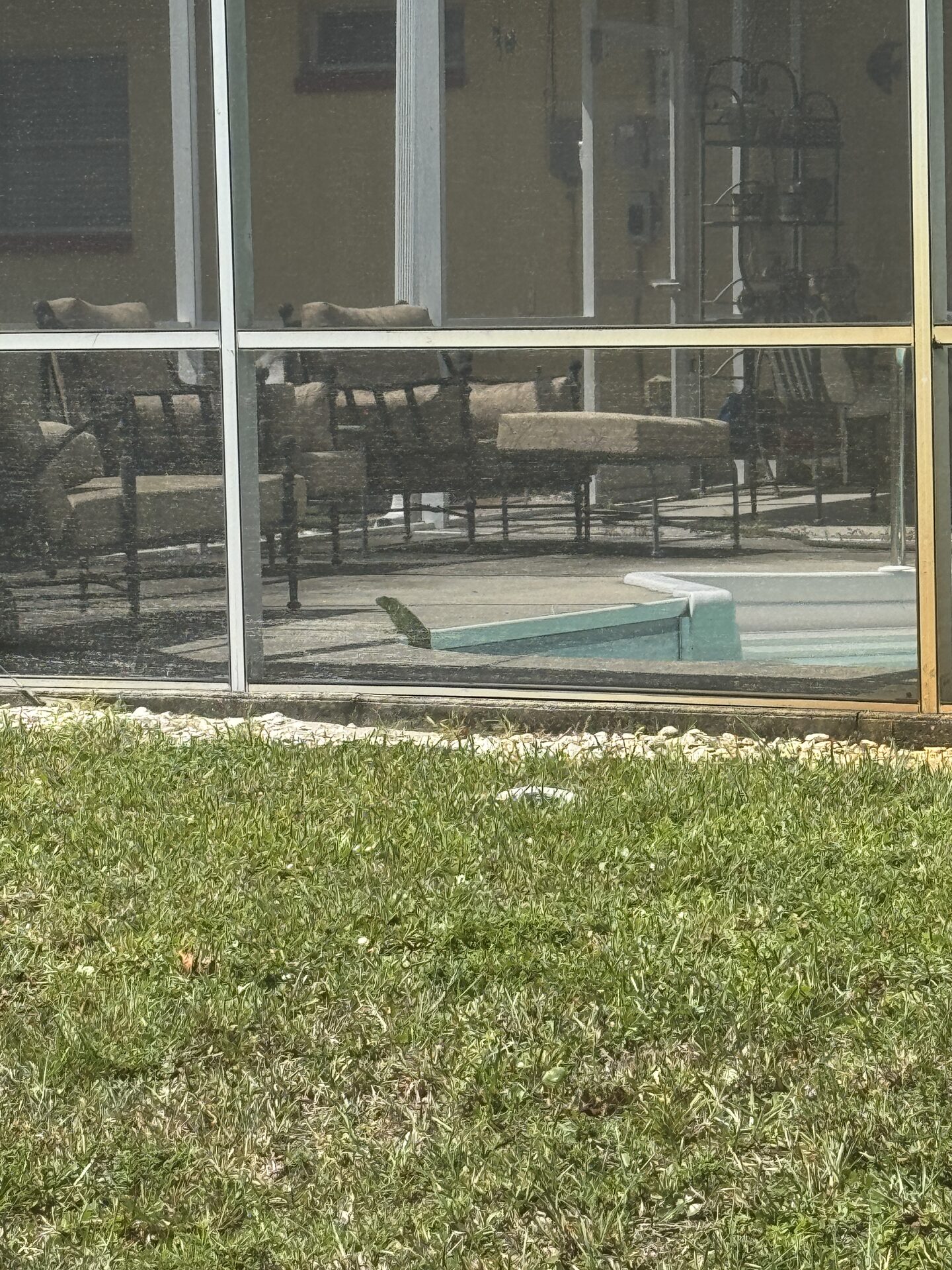
This photo shows exactly what many Southwest Florida homeowners find on a warm afternoon: an iguana making itself at home in your pool. It looks almost peaceful. It is not. An iguana in your pool is a health hazard, a contamination risk, and a sign that iguanas are using your property as their personal habitat.
Why Iguanas Get in Your Pool
Iguanas are attracted to water. They drink from pools, use pool decks as basking spots to absorb heat, and sometimes fall in while trying to drink or cross the pool area. Pools offer everything iguanas want: fresh water, warm concrete to sunbathe on, and a quiet spot away from predators.
The problem is that once an iguana discovers your pool, it comes back. Iguanas are territorial and habitual. If your pool area is part of their daily routine, they will return every day unless removed.
Why an Iguana in Your Pool Is a Health Hazard
An iguana in your pool is not just an inconvenience. It is a contamination event.
- Salmonella: Iguana droppings carry salmonella bacteria. When an iguana defecates in or near your pool, the bacteria enter the water. Standard chlorine levels may not be enough to kill salmonella immediately, especially if the contamination is fresh.
- E. coli and other bacteria: Iguana waste can introduce multiple types of bacteria into pool water, including E. coli. These pathogens survive in pool water longer than most people realize.
- Skin and surface contamination: The iguana itself carries bacteria on its skin and claws. Even if it does not defecate in the pool, it contaminates the water and the pool deck simply by being there.
- Pet exposure: Dogs that drink from the pool or lick the pool deck after an iguana has been there are at risk of bacterial infection.
- Child exposure: Children are more likely to accidentally swallow pool water while swimming. Salmonella from iguana contamination can cause serious illness in children.
What to Do Right Now
If you find an iguana in your pool:
- Do not try to grab it with your hands. Iguanas bite and scratch when stressed. Use a pool skimmer or net to scoop it out.
- Remove it from the pool area. Place it away from the pool. Do not try to relocate it elsewhere in Florida. That is illegal.
- Shock the pool. Add a chlorine shock treatment to kill bacteria. Follow the manufacturer's instructions.
- Run the filter for 24 hours. This circulates and filters the treated water.
- Test before swimming. Verify chlorine and pH levels are safe before anyone enters the pool.
- Clean the deck. Use a bleach solution to clean any droppings from the pool deck.
Why Cleaning the Pool Is Not Enough
Shocking the pool and cleaning the deck treats the contamination, but it does not solve the problem. If iguanas are still on your property, they will be back in your pool tomorrow. The droppings will return. The bacteria will return. The health risk continues every day iguanas have access to your pool.
The only permanent solution is to remove the iguana population from your property. That means professional capture and removal, burrow remediation to destroy nesting sites, and ongoing suppression to prevent new iguanas from moving in.
How to Stop Iguanas from Using Your Pool
Pool covers help when the pool is not in use, but they are not practical for daily use in Southwest Florida. The most effective approach is a combination of removal and prevention:
- Professional removal: FWC-permitted capture and removal of all iguanas using your pool area
- Burrow remediation: Excavate and backfill any burrows near the pool or pool equipment
- Habitat modification: Remove iguana-favorite plants near the pool area and clear basking spots on the pool deck
- Ongoing suppression: Weekly monitoring visits to catch any new iguanas before they discover your pool
The Bottom Line
An iguana in your pool is not a one-time event. It is a sign that iguanas have claimed your property as their territory. Every day they have access to your pool, the health risk continues. Professional removal eliminates the source of the problem so your pool stays clean and safe.
Rocky's Cane Toad and Iguana Management serves Naples, Fort Myers, Cape Coral, Bonita Springs, Estero, Port Royal, Sanibel, and Captiva. We hold a Conditional/Prohibited/Nonnative Species Permit from the Florida Fish and Wildlife Conservation Commission. Free property inspections. Call (239) 922-5992 or visit iguanaswfl.com.