
Waterfront condominiums and HOA communities in Southwest Florida face some of the toughest iguana problems in the region. Seawalls, docks, shared landscaping, and warm concrete pool decks create an ideal habitat for iguanas to feed, bask, and burrow. When one unit has iguanas, the entire community usually does. This guide explains why waterfront properties attract iguanas, the unique challenges condos face, and how associations should approach removal.
Why Waterfront Properties Attract Iguanas
Iguanas are drawn to waterfront properties for several reasons:
- Water access: Iguanas need fresh water to drink. Canals, lakes, and waterfront edges provide a reliable supply. Seawall caps and dock pilings also serve as basking spots with easy escape into the water.
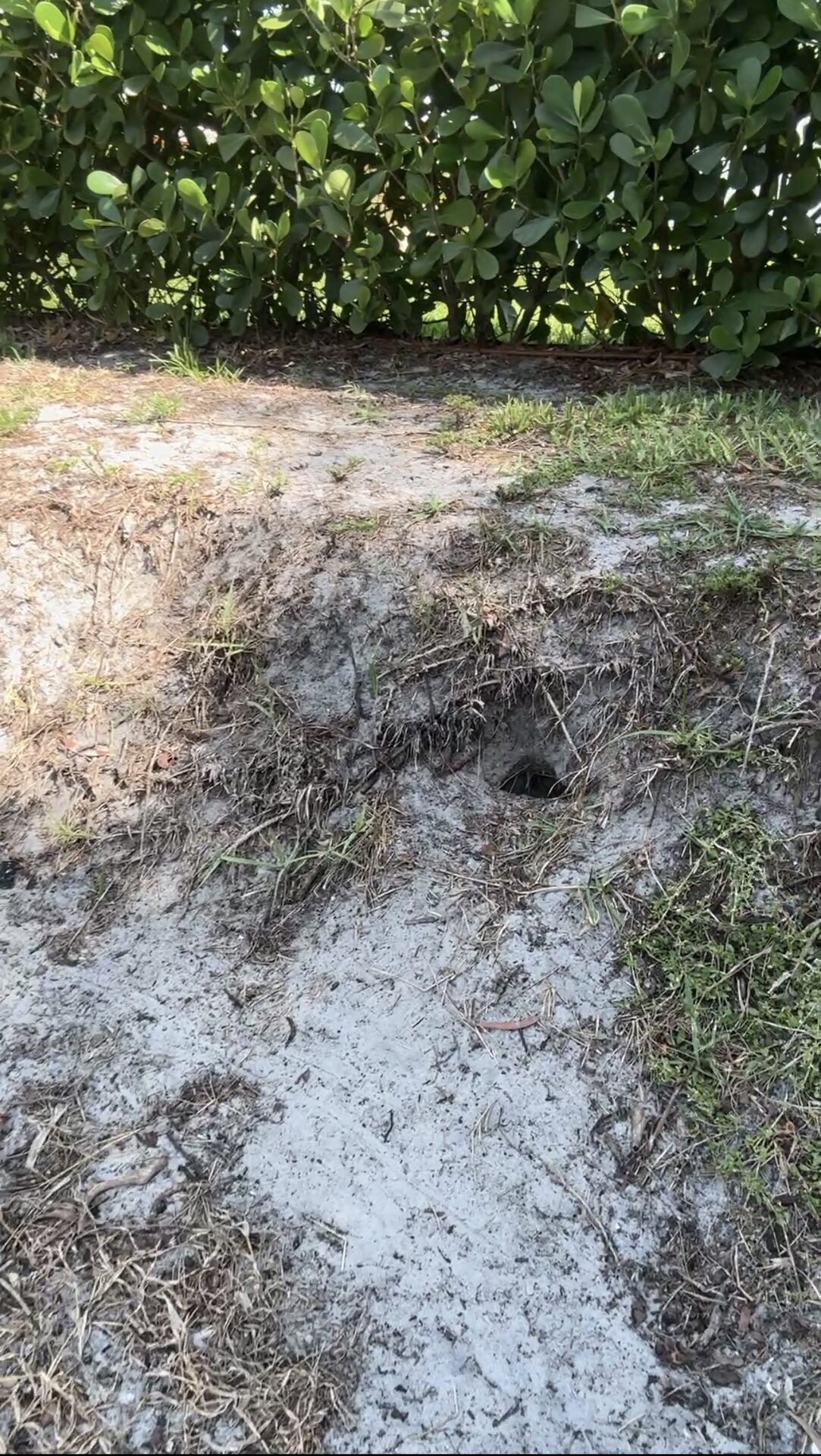
- Burrowing habitat: Seawalls and lake banks are ideal for burrows. Iguanas dig into the soft earth behind and beneath seawalls, where the structure provides a stable roof. Burrows can extend 6 feet deep and 80 feet long, undermining the seawall itself.
- Lush landscaping: Waterfront condos typically invest heavily in ornamental plants like hibiscus, orchids, and bromeliads, all of which are iguana favorites.
- Warm surfaces: Concrete seawall caps, dock planks, and pool decks hold heat, giving iguanas ideal basking spots throughout the day.
- Limited predators: Developed waterfront areas have few natural predators, allowing iguana populations to grow unchecked.
Unique Challenges for Condominiums
Single-family homeowners can act quickly when they spot iguanas. Condominium associations face a more complex situation:
Shared Walls and Common Areas
Iguanas do not respect unit boundaries. A burrow under one unit's seawall can affect the structural integrity of shared walls and common walkways. Iguanas basking on the pool deck affect every resident, not just one owner.
HOA Coordination
Removing iguanas from a condo property requires board approval, budget allocation, and coordination with the property manager. One unit owner cannot solve the problem alone because iguanas move freely across the entire property.
Multiple Unit Owners
Getting consensus among dozens or hundreds of unit owners takes time. Some residents may not see iguanas as a problem, while others deal with daily damage. Education and clear communication are essential before the board commits to a removal program.
Common Area Liability
Iguana burrows near walkways, pool decks, and seawalls create trip hazards and structural risks. The association bears liability for injuries or damage caused by deteriorating infrastructure.
Burrow Damage to Seawalls and Dock Areas
Burrowing is the most serious threat iguanas pose to waterfront properties. Iguanas excavate extensive burrow systems behind and beneath seawalls. Over time, these burrows undermine the seawall footing, leading to cracks, settling, and eventual failure. Seawall replacement in Southwest Florida can cost tens of thousands of dollars per section. Burrows under dock areas weaken pilings and create voids that collapse under foot traffic.
Iguana burrows near pool decks and lanais also create safety hazards. Burrow entrances can be 6 to 12 inches across, large enough for a child or pet to step in and twist an ankle. During nesting season, females lay 30 to 70 eggs per clutch in these burrows, rapidly expanding the underground network.
Pool Cage and Screen Damage
Iguanas claw their way through pool cage screens to access basking spots and food plants inside screened enclosures. Once inside, they defecate on pool decks, damage furniture, and stress residents. Repeated screen repairs are a constant expense for waterfront condos. The solution is removing the iguanas before they tear through the screens, not just patching the holes.
How Condo Associations Should Approach Iguana Removal
A structured approach gets results and keeps the community informed:
- Board resolution: The board should pass a resolution authorizing iguana removal as a maintenance expense. Document the problem with photos of burrows, droppings, and damage to justify the budget.
- Property inspection: Have a licensed, FWC-permitted professional conduct a full property inspection. This identifies burrow locations, population size, and priority areas.
- Vendor selection: Choose a removal company that is licensed, insured, and holds a Conditional/Prohibited/Nonnative Species Permit from the FWC. Ask for references from other condo associations.
- Member communication: Notify residents before removal begins. Explain the process, timeline, and what to expect. Transparency prevents complaints and builds support.
- Ongoing suppression: Iguanas from neighboring properties will move in if the population is removed but not monitored. Schedule regular monitoring visits to catch new arrivals before they establish burrows.
Rocky's Works with Condo Associations and Waterfront HOAs
Rocky's Cane Toad and Iguana Management works with condominium associations, waterfront HOAs, and property management companies throughout Southwest Florida. We handle the full process: inspection, capture and removal, burrow remediation, screen exclusion, and ongoing suppression. We coordinate with boards and property managers to keep residents informed and the property protected.
For pricing details, visit our iguana removal pricing page. To learn about our HOA programs, see our HOA and community programs. You may also find our guides on keeping iguanas off docks and seawalls and communicating with community members about iguana removal helpful. Call (239) 922-5992 for a free property inspection.
About the Author
Chris "Rocky" Rockwell
Owner, Rocky's Cane Toad and Iguana Management, LLC - Naples, FL
Licensed, insured, Conditional/Prohibited/Nonnative Species Permit from the Florida Fish and Wildlife Conservation Commission. Contact: chris@iguanaswfl.com or (239) 922-5992.
Frequently Asked Questions
Why do iguanas like waterfront properties?
Waterfront properties offer everything iguanas need: fresh water to drink, soft earth behind seawalls for burrowing, warm concrete surfaces for basking, and lush ornamental landscaping for food. The limited predator presence in developed waterfront areas allows populations to grow rapidly.
Can iguanas damage seawalls on condo properties?
Yes. Iguanas dig extensive burrows behind and beneath seawalls, which can extend 6 feet deep and 80 feet long. Over time these burrows undermine the seawall footing, causing cracks, settling, and eventual failure. Seawall repair or replacement can cost tens of thousands of dollars.
How should a condo association handle iguana removal?
The board should pass a resolution authorizing removal, commission a professional property inspection, select a licensed and FWC-permitted vendor, communicate the plan to residents, and budget for ongoing suppression to prevent new iguanas from moving in from neighboring properties.
Do you work with condominium associations?
Yes. Rocky's Cane Toad and Iguana Management works with condominium associations, waterfront HOAs, and property management companies throughout Southwest Florida. We handle inspection, removal, burrow remediation, and ongoing suppression, and we coordinate with boards and property managers.
How much does iguana removal cost for a waterfront property?
Cost depends on the size of the property, the number of iguanas, and the extent of burrow damage. Trapped iguana removal starts at $125 in Collier County. For waterfront condos and HOAs, we provide custom quotes after a free property inspection. See our iguana removal pricing page for details.