
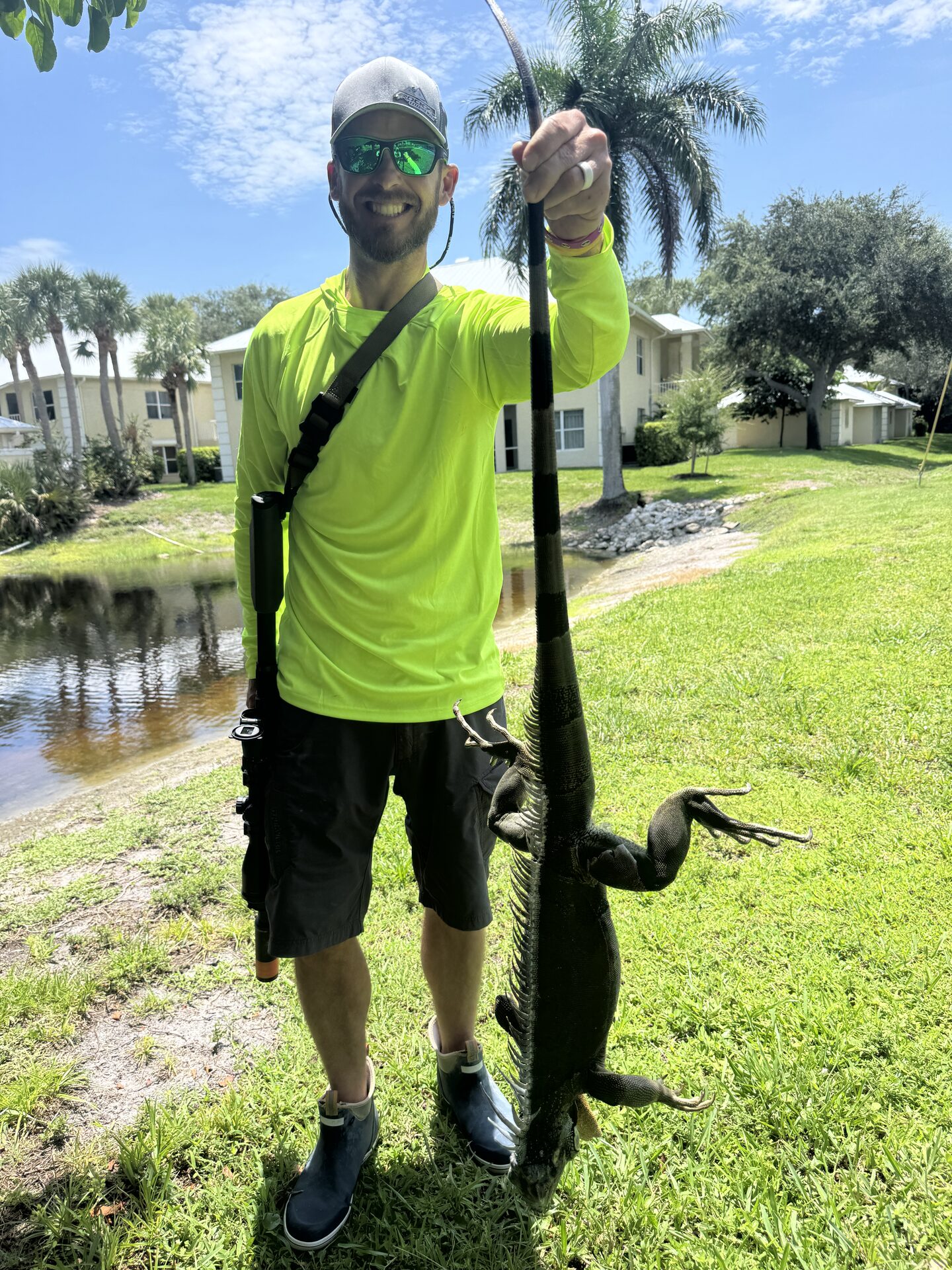
If iguanas are eating your landscaping, you are not alone. Southwest Florida homeowners spend thousands replacing hibiscus, orchids, and bromeliads only to watch iguanas eat them again. While no plant is completely iguana-proof, some plants are far less appealing to iguanas than others. Planting iguana-resistant species and using smart landscaping strategies can significantly reduce damage. This guide covers what iguanas eat, what they avoid, and how to design a landscape that holds up better.
What Iguas Eat
Iguanas are primarily herbivores, and they are not picky. In Southwest Florida, they feed heavily on ornamental plants that homeowners love. The most commonly damaged plants include:
- Hibiscus: This is the single most iguana-targeted plant in Southwest Florida. Iguanas eat the flowers, leaves, and tender stems.
- Orchids: Orchids mounted on trees or in beds are frequent targets, especially the flowers and new growth.
- Bromeliads: The fleshy leaves and colorful bracts attract iguanas.
- Roses: Iguanas eat rose petals and new leaf growth.
- Caladiums: The tender leaves of caladiums are easy for iguanas to consume.
- Impatiens: These soft annuals are quickly stripped by feeding iguanas.
For a more detailed breakdown, see our guide on what plants iguanas eat in Florida.
Plants Iguanas Tend to Avoid
While no plant is guaranteed to be iguana-free, the following species are generally left alone or only lightly browsed. These are good choices for landscapes where iguanas are active:
- Oleander: Oleander is toxic, and iguanas typically avoid it. It is one of the most reliable iguana-resistant shrubs for Southwest Florida.
- Crotons: The thick, leathery leaves of crotons are unappealing to iguanas. They also add strong color to the landscape.
- Milkweed: Milkweed contains compounds that deter iguanas. It also supports monarch butterflies, making it a dual-purpose choice.
- Citrus trees: Iguanas generally avoid citrus leaves and fruit. Lemon, lime, and orange trees are rarely damaged.
- ixora: The dense, tough leaves of ixora are not a preferred food source.
- Bottlebrush: The fibrous leaves and tough texture of bottlebrush make it unattractive to iguanas.
- Society garlic: The strong odor and taste of society garlic deter iguanas and many other pests.
- Lantana: Lantana is mildly toxic and typically avoided by iguanas. It is also drought-tolerant and low-maintenance.
- Figs: While iguanas may eat ripe fig fruit, they usually avoid the leaves and woody stems of established fig trees.
The Important Caveat: No Plant Is 100% Iguana-Proof
This is the most important point in this guide. During drought conditions or when food is scarce, iguanas will eat almost anything, including plants they normally avoid. A plant that iguanas ignored for years may suddenly be stripped during a dry spell. No plant list is a substitute for active iguana management. Use resistant plants as one layer of defense, not as your only strategy.
The University of Florida IFAS Extension provides research-based information on iguana feeding habits. Their publications on iguana management are a useful reference for understanding which plants are most vulnerable.
Landscaping Strategies to Reduce Iguana Damage
Beyond plant selection, how you arrange and protect your landscape matters. These strategies help reduce damage:
Cluster Resistant Plants Near Water Features
Iguanas are most active near water. Planting resistant species like oleander, crotons, and society garlic around pool decks, docks, and waterfront edges creates a buffer zone that iguanas are less likely to penetrate. Save vulnerable plants for areas farther from water.
Use Raised Planters
Raised planters make it harder for iguanas to reach tender plants. While iguanas can climb, a raised planter with smooth-sided walls adds a barrier. Combine raised planters with resistant border plants for extra protection.
Protect Vulnerable Plants with Wire Mesh
If you want to keep hibiscus or orchids, protect them with wire mesh cages or hardware cloth. The mesh should be tall enough to prevent iguanas from reaching over and buried deep enough to prevent digging under. This is labor-intensive but effective for high-value specimens.
Remove Basking Spots
Iguanas need warm, flat surfaces to regulate their body temperature. Removing unnecessary basking spots like low walls, flat rocks, and open concrete areas near vulnerable plants makes your property less attractive.
When Landscaping Alone Is Not Enough
Smart plant selection reduces damage, but it does not remove iguanas from your property. If you have an established iguana population, they will still burrow, defecate on your pool deck, and damage screens. The most effective approach combines resistant landscaping with professional iguana removal, burrow remediation, and ongoing suppression.
Rocky's Cane Toad and Iguana Management provides professional iguana removal throughout Southwest Florida. See our iguana removal pricing or call (239) 922-5992 for a free property inspection. We help you protect both your landscape and your property.
About the Author
Chris "Rocky" Rockwell
Owner, Rocky's Cane Toad and Iguana Management, LLC - Naples, FL
Licensed, insured, Conditional/Prohibited/Nonnative Species Permit from the Florida Fish and Wildlife Conservation Commission. Contact: chris@iguanaswfl.com or (239) 922-5992.
Frequently Asked Questions
What plants do iguanas hate?
Iguanas tend to avoid oleander, crotons, milkweed, citrus, ixora, bottlebrush, society garlic, and lantana. These plants have tough leaves, strong odors, or mild toxicity that makes them unappealing. However, no plant is completely iguana-proof, especially during drought.
Do iguanas eat hibiscus?
Yes. Hibiscus is one of the most iguana-targeted plants in Southwest Florida. Iguanas eat the flowers, leaves, and tender stems. If you have hibiscus and iguanas on your property, expect heavy damage.
What can I plant that iguanas will not eat?
Oleander, crotons, milkweed, society garlic, lantana, ixora, bottlebrush, and citrus are generally left alone. These are your best bets for iguana-resistant landscaping. Combine them with physical barriers like wire mesh for vulnerable plants.
Are there any iguana-proof plants?
No plant is 100% iguana-proof. During drought or food scarcity, iguanas will eat almost anything, including plants they normally avoid. Use resistant plants as one layer of defense, but do not rely on them alone. Active iguana removal is still necessary.
Does oleander repel iguanas?
Oleander is toxic and iguanas typically avoid it. It is one of the most reliable iguana-resistant shrubs for Southwest Florida. However, oleander is also toxic to humans and pets, so plant it with caution in areas where children or animals may have access.