
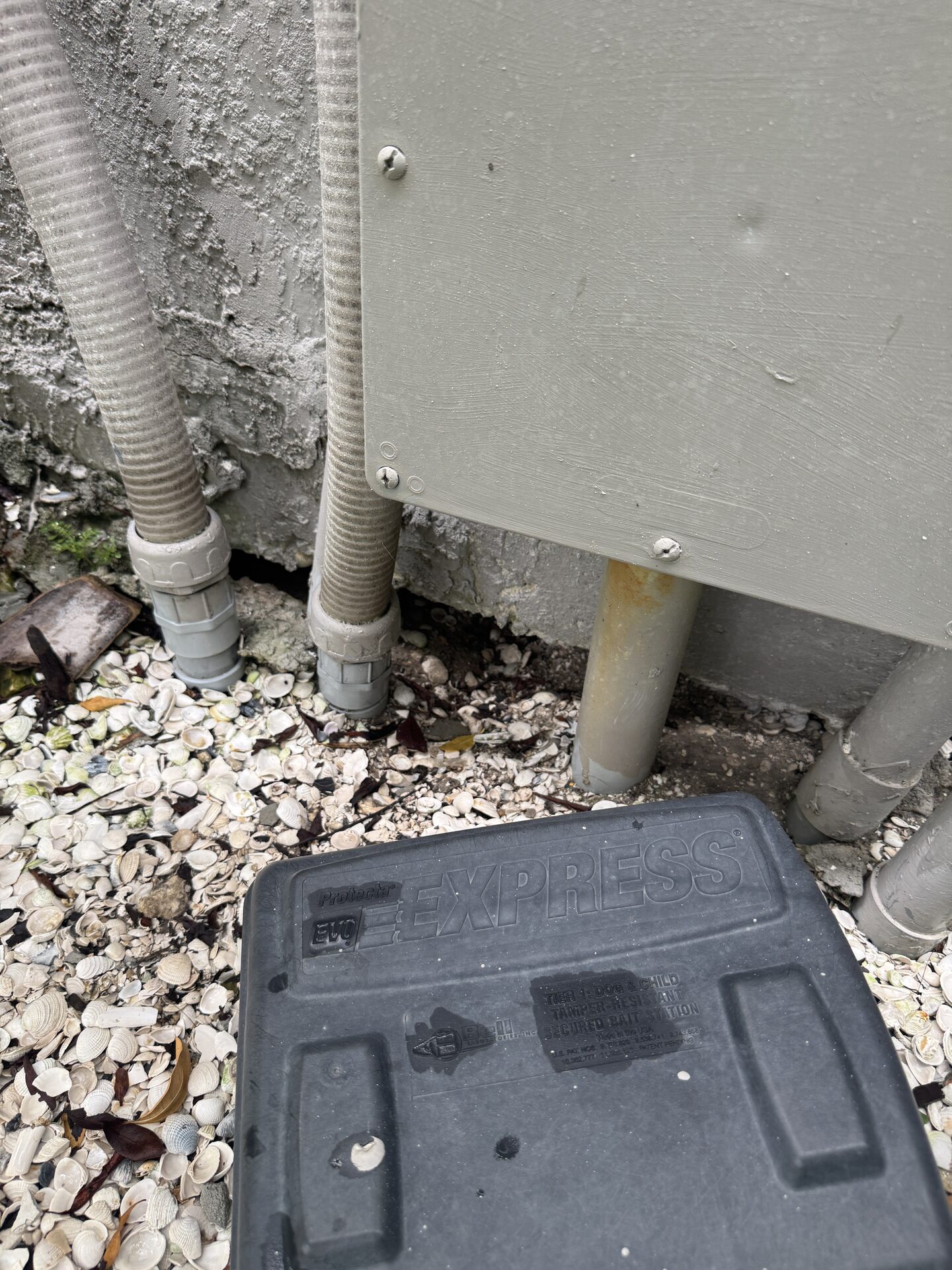
The first sign of an iguana problem is usually a hole in the ground that was not there before. It might appear near your seawall, under your deck, or along the edge of your pool equipment pad. That hole is likely the entrance to an iguana burrow, and it is a sign of a problem that goes far deeper than what you can see from the surface. This guide will help you identify iguana burrows, recognize the signs of iguana damage, and understand why professional remediation is essential.
What Iguana Burrows Look Like
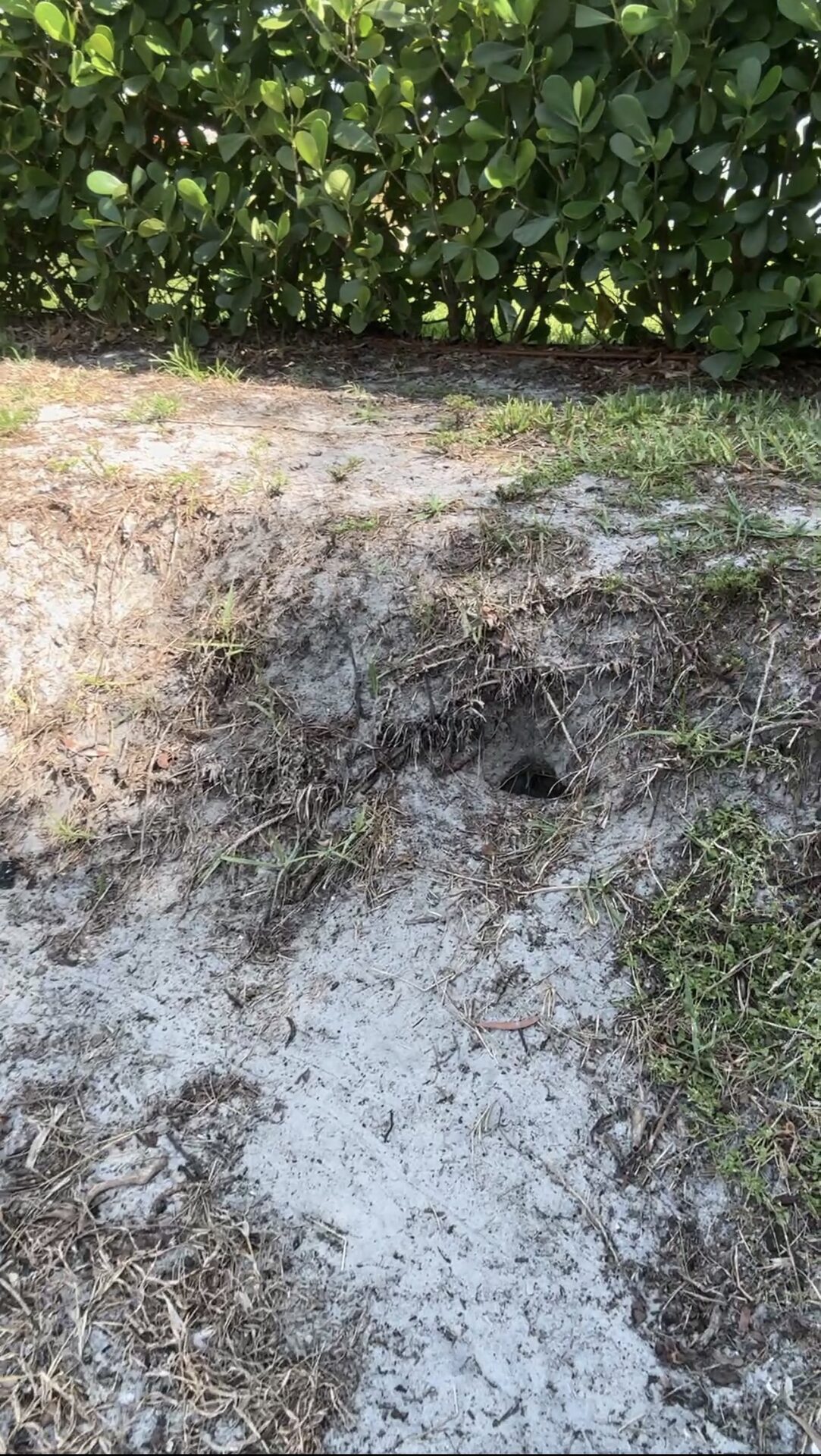
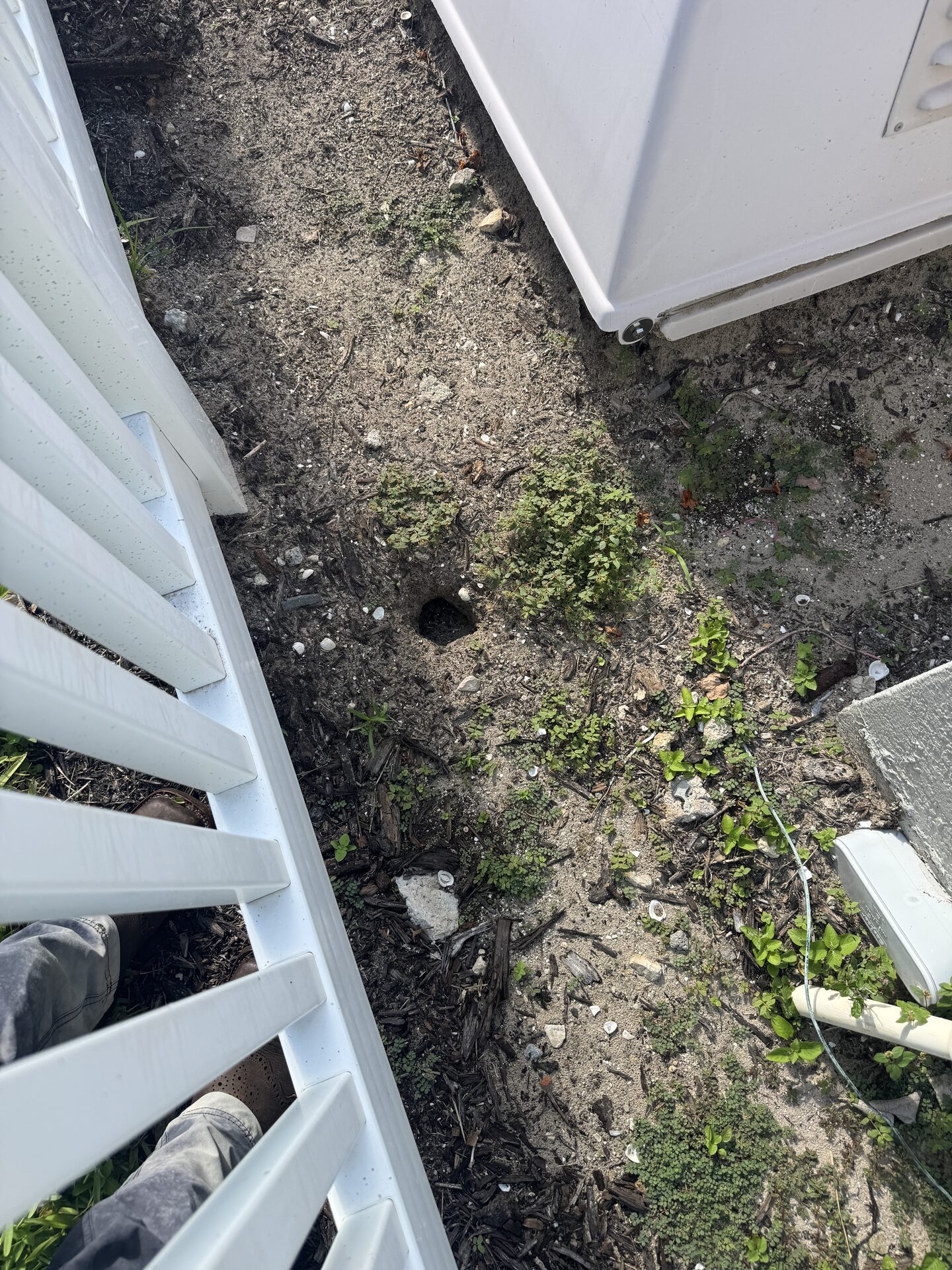
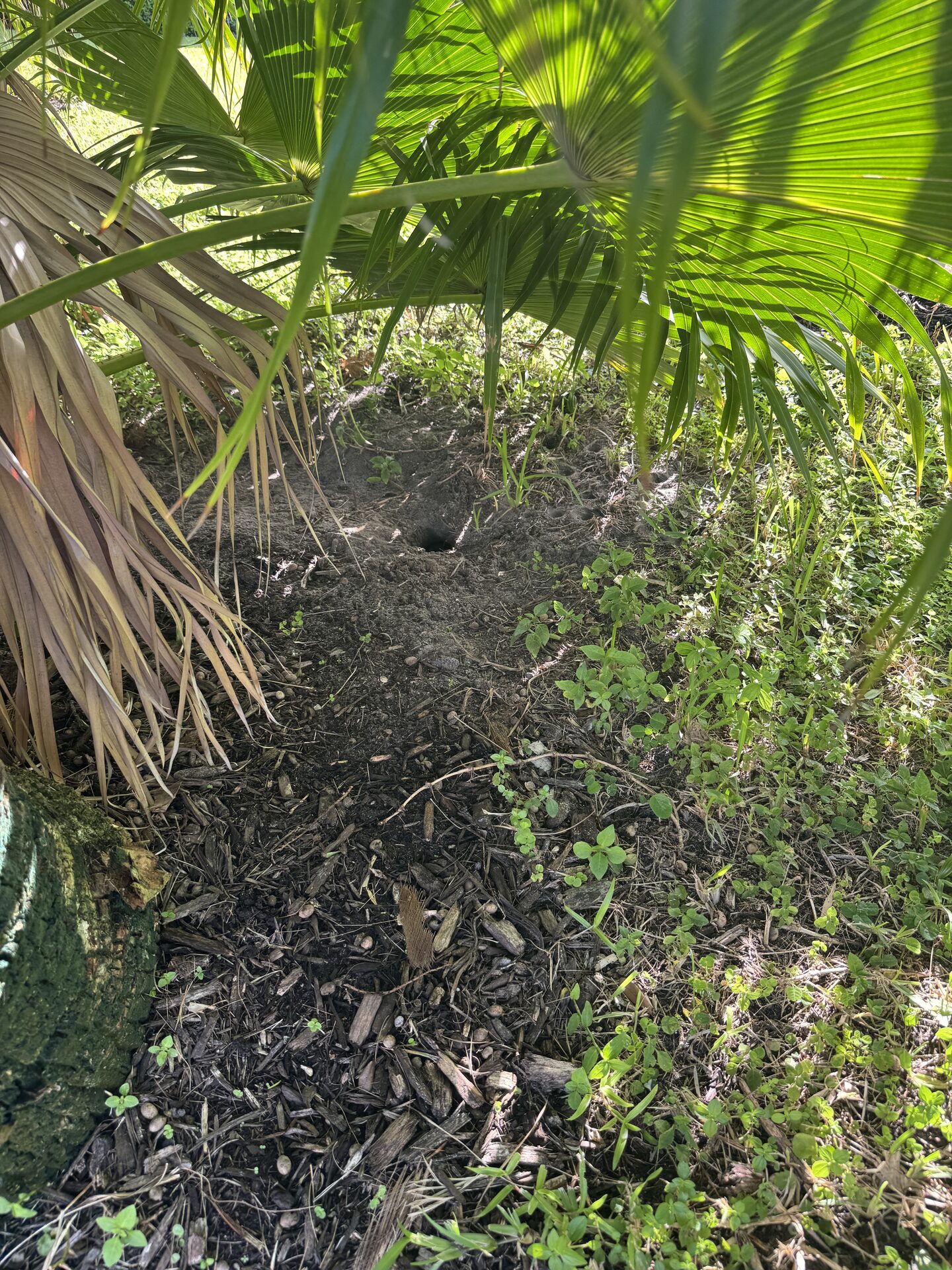
Iguana burrows are not subtle once you know what to look for. The entrance is typically 6 to 12 inches in diameter, roughly the size of a softball or a small plate. The opening may be surrounded by freshly dug soil, which is often lighter in color than the surrounding ground.
What makes iguana burrows dangerous is their size underground. A single burrow can go 6 feet deep and 80 feet long. The tunnel is not a simple hole. It is an extensive underground network that can run beneath seawalls, foundations, pool decks, and landscaping. The void created by a burrow of this size can compromise the structural integrity of anything built above it.
Burrow entrances are often found:
- Near seawalls, where the soil is soft and easy to dig
- Under house foundations and slabs
- Under decks and patios
- Near pool equipment pads
- Along lake banks and canal banks
- In beach dunes and coastal areas
- Near dense vegetation that provides cover
Where to Look for Burrows
If you suspect iguanas on your property, here are the areas to inspect. Burrows are almost always near a structural feature that the iguana can dig beneath or alongside.
Behind Seawalls
Seawalls are the most common burrow location on waterfront properties. The soil behind a seawall is soft, and the wall itself provides a solid roof for the burrow. This is also the most dangerous location, because a burrow behind a seawall can undermine the wall and lead to collapse.
Under House Foundations
Iguanas will dig under foundations, slabs, and footings. The stable structure above gives them a secure burrow, but the void below can cause settling, cracking, and foundation damage over time.
Near Pool Equipment Pads
The concrete pad under pool equipment is another favorite. The pad provides a solid roof, and the surrounding soil is often soft and easy to dig. Burrows here can cause the pad to shift or crack, damaging expensive equipment.
Along Canal and Lake Banks
Waterfront properties along canals and lakes are prime territory. The soft bank soil and access to water make these areas ideal for burrows. Erosion from burrows can cause bank collapse and land loss.
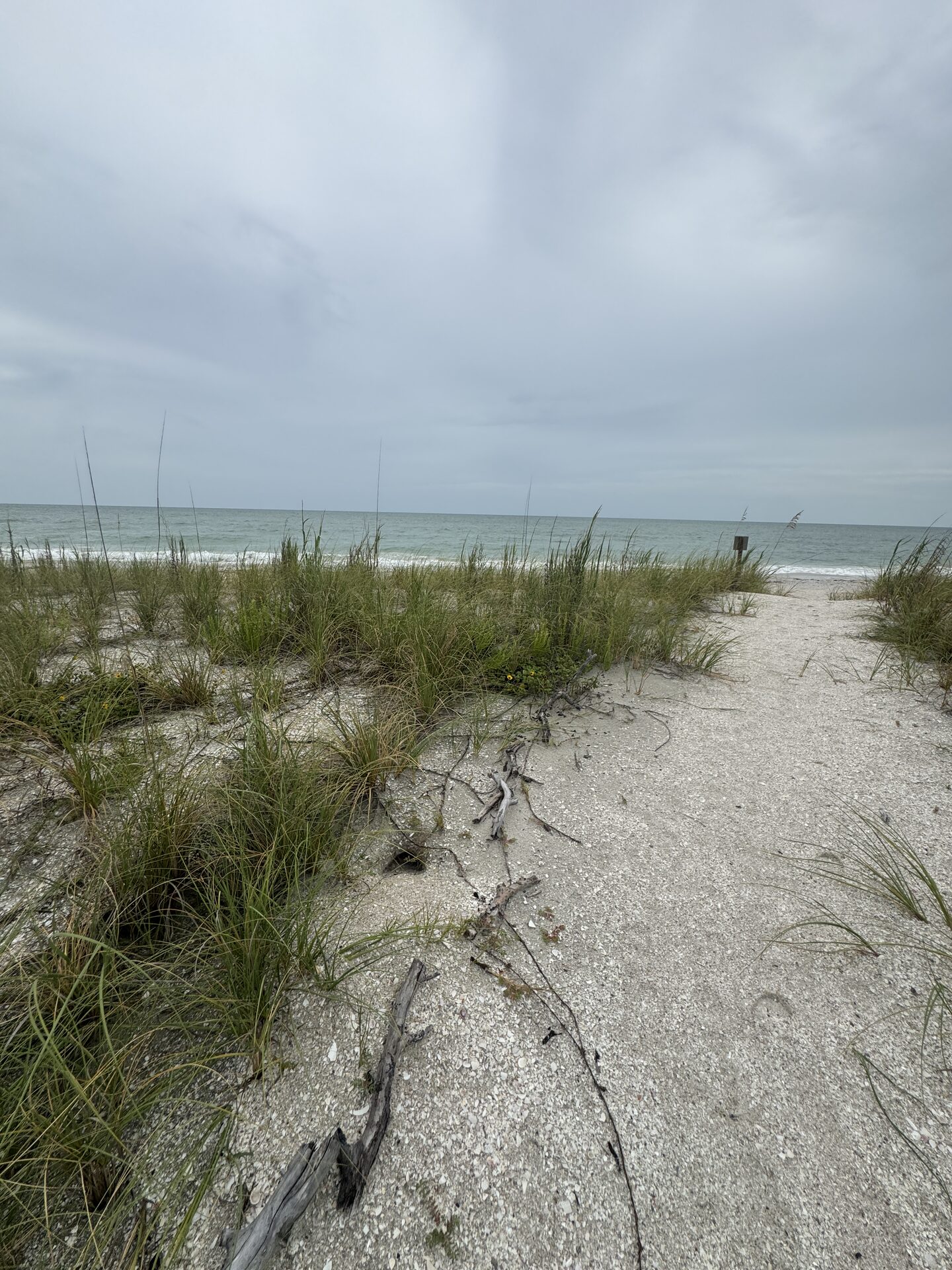
In Beach Dunes
Coastal properties with dunes are vulnerable. Iguanas dig into the dunes, which can cause collapse and erosion that threatens both the dune system and any nearby structures.
Other Signs of Iguana Activity
Burrows are the most serious sign, but they are not the only one. If you notice any of these signs, you may have an active iguana population:
- Droppings near burrow entrances: Iguana droppings are often found near the burrow opening, sometimes in significant quantities.
- Sunbathing iguanas: Iguanas are diurnal and active during the day. If you see iguanas on seawalls, docks, fences, or rooftops basking in the sun, there is likely a burrow nearby.
- Stripped landscaping: Iguanas eat a wide variety of plants. If your hibiscus, orchids, or garden plants are being eaten down to the stems, iguanas are a likely culprit.
- Cracks or settling in concrete: Unexplained cracks in your pool deck, driveway, or patio slab can indicate a void below from an iguana burrow.
- Droppings in the pool: Iguanas often defecate in or near water. Finding droppings in your pool is a sign of active iguanas on the property.
What Damage Looks Like Over Time
Iguana burrow damage is progressive. What starts as a small hole becomes a serious structural problem if left unaddressed. Over time, you may see:
- Seawall cracking and leaning: As the burrow undermines the wall, the soil behind it loses support. The wall can crack, lean, or eventually collapse.
- Foundation settling: A burrow under a foundation creates a void. The foundation can settle unevenly, causing cracks in walls, floors, and the structure above.
- Pool equipment pad shifting: A burrow under the pad can cause it to shift or crack, leading to misaligned equipment and potential damage.
- Lake bank erosion: Burrows along banks weaken the soil structure. Over time, sections of bank can collapse into the water.
- Dune collapse: Burrows in dunes can cause sections to collapse, threatening coastal property and the dune system itself.
The cost of repairing this kind of structural damage far exceeds the cost of professional iguana removal and burrow remediation. The earlier you address the problem, the less damage occurs.
Why You Need Professional Burrow Remediation
Filling the entrance of an iguana burrow with dirt does not solve the problem. The tunnel extends 6 feet deep and up to 80 feet long underground. Simply filling the entrance leaves the void intact, and iguanas will often reopen the burrow or dig a new entrance nearby.
Professional burrow remediation involves:
- Full excavation: The entire burrow is excavated to expose the full extent of the void. This ensures no tunnel is left underground to cause future problems.
- Proper backfilling: The excavated area is backfilled with compacted soil to restore structural support. Simply dumping loose soil into a hole is not enough. The soil must be compacted to prevent future settling.
- Structural assessment: After excavation, the surrounding structures (seawall, foundation, pool pad) are assessed for damage that may need repair.
This is specialized work that requires the right equipment, the right expertise, and an understanding of how burrows interact with structures. General pest control companies do not handle this kind of work. You need a wildlife professional with experience in iguana burrow remediation.
Schedule a Free Inspection
If you have found holes on your property, noticed cracks in your hardscape, or seen iguanas basking on your seawall, the next step is a free property inspection. Rocky's Cane Toad and Iguana Management will identify active burrows, assess the damage, and recommend a remediation plan. We serve Naples, Fort Myers, Cape Coral, Bonita Springs, Estero, Port Royal, Sanibel, and Captiva. Call (239) 922-5992 to schedule your free inspection. Same-day response and 24/7 emergency service available.