
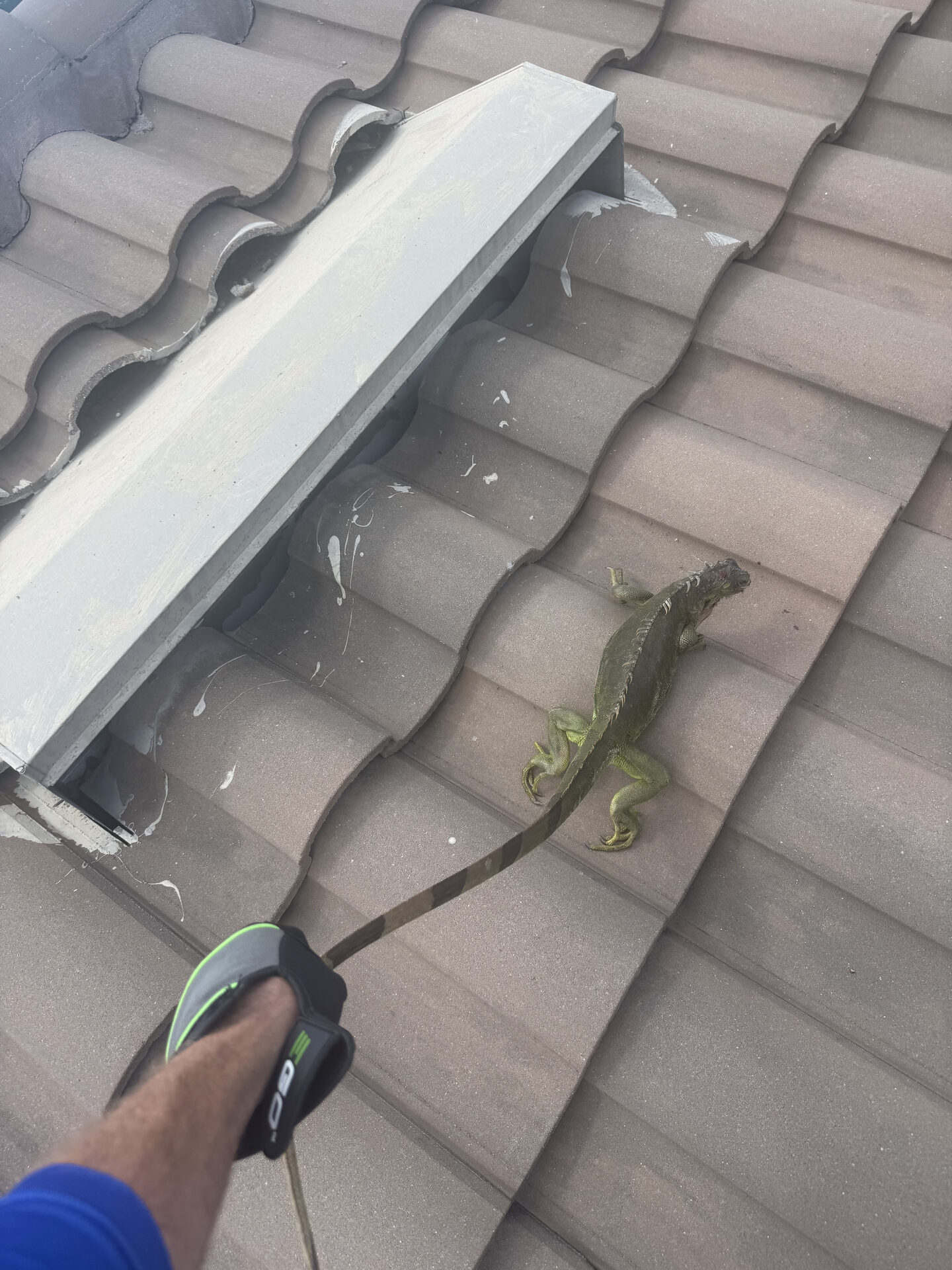
Most people think of iguanas as a yard problem. They see them basking on seawalls, climbing fences, or eating hibiscus in the landscaping. But iguanas are excellent climbers, and if your roof has access points, they can and will get into your attic. A homeowner in Southwest Florida sent us this photo of an iguana literally climbing into their attic space, and it prompted us to write this guide so you know what to look for and what to do.
How Iguanas Get Into Attics
Iguanas are skilled climbers. They climb trees, fences, screen enclosures, and exterior walls with ease. A mature green iguana can scale a rough surface vertically, and once it reaches the roofline, it only needs a small gap to squeeze through. Once inside the attic, the animal has shelter, warmth, and safety from predators, which is exactly what it is looking for.
Iguanas typically enter attics through these access points:
- Uncovered roof vents
- Gaps in soffits or eaves
- Broken or loose roof tiles
- Gaps around plumbing stacks and chimneys
- Unscreened gable vents
- Tree branches that overhang the roof, creating a bridge from a tree to the structure
Overhanging branches are one of the most common ways iguanas reach the roof in the first place. A large ficus or oak branch that touches or comes within a few feet of the roof gives an iguana a direct path up and over. From there, it will explore the roofline for any opening.
Signs of Iguanas in Your Attic
Iguanas are diurnal, meaning they are active during the day, not at night. This is an important distinction because most attic noise complaints from rodents and raccoons happen at night. If you hear sounds during daylight hours, an iguana is a strong candidate.
Common signs of iguanas in your attic include:
- Scratching or thumping sounds during the day, particularly in the morning and late afternoon
- Droppings in the attic or around the roof line
- Strong odor from accumulated waste
- Damaged insulation from burrowing and nesting
- Visible iguanas on your roof or near roof access points
- Chewed or damaged wires, which is less common but possible
If you notice any of these signs, it is worth having a professional inspect the attic and roofline before the problem gets worse. A single iguana can do significant damage in a short period.
Damage Iguanas Cause in Attics
Once an iguana is inside your attic, the damage adds up quickly. The space was never designed for an animal, and the combination of claws, waste, and nesting behavior takes a toll on the structure.
Insulation Damage
Iguanas crush and contaminate insulation as they move around and nest. Their droppings soak into fiberglass and cellulose insulation, ruining its thermal performance and leaving a lasting odor. Contaminated insulation usually has to be removed and replaced, which is a significant expense on top of the removal itself.
Structural Damage
Iguana claws are sharp and strong. They can damage drywall, ductwork, and wiring as they move through tight spaces. Over time, repeated scratching and climbing can compromise the integrity of duct seams and create gaps in the building envelope.
Health Hazards
Iguana droppings carry salmonella and other bacteria. In the enclosed, hot environment of a Southwest Florida attic, accumulated waste creates a serious air quality issue. If your HVAC system draws air from or near the attic, those contaminants can circulate into your living space.
Fire Risk
If an iguana damages wiring in the attic, it creates a fire hazard. Exposed wires in a hot, dry space are a real risk, and attic fires often go undetected until they have already spread. This is one of the most dangerous consequences of having an iguana in your attic.
Attracting Other Pests
Iguana waste and nesting material can attract insects and other animals. What starts as one iguana problem can turn into a broader pest issue if the mess is left unaddressed after removal.
What to Do If You Have an Iguana in Your Attic
If you suspect an iguana has gotten into your attic, here is what you should do.
Do Not Try to Remove It Yourself
Iguanas can bite and scratch, and they are surprisingly fast in tight spaces. An iguana cornered in an attic is stressed and defensive, and trying to grab or corner one without the right equipment and training is a good way to get hurt. This is a job for a professional.
Call a Professional
Rocky's is FWC-permitted under the Conditional/Prohibited/Nonnative Species Permit and experienced in attic removal. We have the equipment and training to safely remove an iguana from an attic, and we do it humanely and legally. Florida law is specific about how green iguanas can be handled, and a permitted professional is the right call.
Seal All Access Points After Removal
Removing the iguana is only half the job. If you do not seal the entry points, another iguana will find the same gap and move right back in. This means screening vents, fixing soffit gaps, trimming overhanging branches, and repairing roof tiles. A thorough exclusion job is what prevents the problem from recurring.
Schedule an Attic Inspection
After the iguana is out and the access points are sealed, the attic should be inspected for damage and contamination. Damaged insulation may need to be replaced, wiring should be checked, and the space should be cleaned and sanitized if waste is present. This protects your home and your air quality.
How to Prevent Iguanas From Getting Into Your Attic
Prevention is the best approach. Once an iguana finds its way into an attic, it can be difficult and expensive to resolve. A few proactive steps will keep them out.
- Trim all tree branches at least 2 feet from your roof. This removes the bridge that most iguanas use to reach the roofline.
- Screen all roof and gable vents with hardware cloth. Use a durable metal mesh, not plastic, because iguanas can chew through softer materials.
- Inspect soffits and eaves for gaps quarterly. These are common entry points that develop over time as materials age and shift.
- Check roof tiles for loose or missing pieces. A single loose tile can create a gap large enough for an iguana to enter.
- Seal any gaps around plumbing stacks and chimneys. These are frequent access points because the flashing and sealant degrade in the Florida sun.
- Do not leave attic access doors or hatches open. This sounds obvious, but we have seen iguanas enter through pull-down stairs left open during a renovation.
These steps are inexpensive compared to the cost of removing an iguana from your attic, replacing contaminated insulation, and repairing structural damage. Prevention is always cheaper than remediation.
Hear Sounds in Your Attic During the Day? Call Rocky's
If you hear sounds in your attic during the day, see iguanas on your roof, or find droppings near your roof line, call Rocky's. We offer free inspections, and we will come out to your property, assess the situation, and give you a clear plan for removal and prevention. We serve Naples, Fort Myers, Cape Coral, Bonita Springs, Estero, and the surrounding Southwest Florida communities.
Call (239) 922-5992 or visit iguanaswfl.com to schedule your free inspection. Do not wait. The longer an iguana stays in your attic, the more damage it does.