
If you live in Southwest Florida, iguana nesting season is the most important time of year to pay attention. From April through October, iguana activity peaks, burrow damage accelerates, and the population explodes. Understanding what happens during nesting season helps you protect your property before the damage becomes structural.
When Is Iguana Nesting Season?
Nesting season runs from April through October in Southwest Florida. Mating peaks in April and May, when males display brighter colors, bob their heads, and fight other males for territory. Females begin digging burrows to lay eggs shortly after mating. Eggs hatch after about 90 days, typically June through October, and juvenile iguanas disperse to find new territory.
What Happens During Nesting Season
During nesting season, three things happen that directly affect your property:
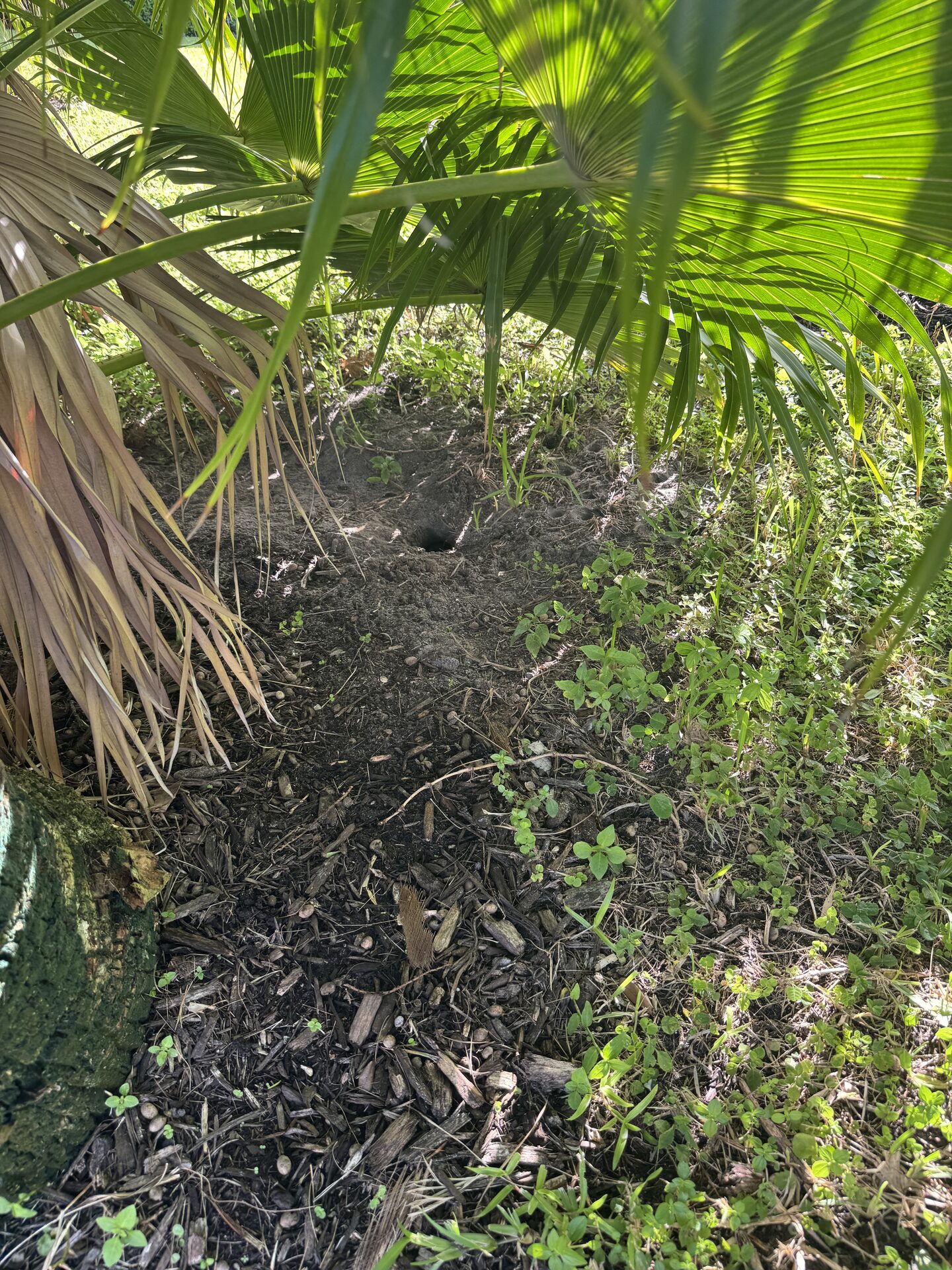
- Burrow digging increases dramatically. Females dig new burrows or expand existing ones to create nesting chambers. These burrows go 6 feet deep and 80 feet long, undermining seawalls, foundations, pool equipment pads, and lake banks.
- Males become aggressive. Territorial males charge, bite, and fight. They may direct aggression at pets and people who get too close to their territory.
- The population explodes. Each female lays 30 to 70 eggs per clutch. With multiple females on a single property, dozens of new iguanas can hatch in one season. Juveniles disperse to neighboring properties, spreading the problem.
Why Nesting Season Causes the Most Property Damage
The burrow digging during nesting season is the primary cause of structural damage. Females prefer to dig behind seawalls, under foundations, near pool equipment, and along lake banks because the soil is soft and the structures above provide a solid roof for the burrow.
Each new burrow removes soil that supports your structures. Over the course of a single nesting season, a property with multiple breeding females can accumulate enough burrow damage to cause seawall cracking, foundation settling, or pool equipment pad failure.
Signs of Nesting Activity on Your Property
- New holes appearing in the ground, especially near seawalls and foundations
- Increased iguana sightings during the day (they are diurnal)
- Male iguanas displaying brighter orange or green coloring
- Head-bobbing behavior and territorial displays
- Females digging in soft soil areas
- Stripped landscaping near burrow entrances (they eat nearby vegetation)
What to Do During Nesting Season
The most effective strategy is to break the reproductive cycle before eggs are laid. Weekly suppression visits during nesting season target breeding females before they can establish nesting burrows. If eggs are already in the ground, the burrow must be excavated and the nesting chamber destroyed.
Rocky's offers nesting season sweeps as part of our ongoing suppression programs. We visit weekly during April through October, check for new burrows, remove breeding females, and destroy nesting sites before eggs can hatch. Monthly hot spot mapping shows exactly where nesting activity is concentrated.
Do Not Wait Until Nesting Season to Act
Many homeowners wait until they see iguanas digging before they call. By that point, burrows are already established and eggs may already be in the ground. The best time to start a suppression program is before nesting season begins, so the population is already reduced when breeding starts.
If you have iguanas on your property in Naples, Fort Myers, Cape Coral, Bonita Springs, Estero, Port Royal, Sanibel, or Captiva, call Rocky's at (239) 922-5992 for a free property inspection. Same-day response available.