
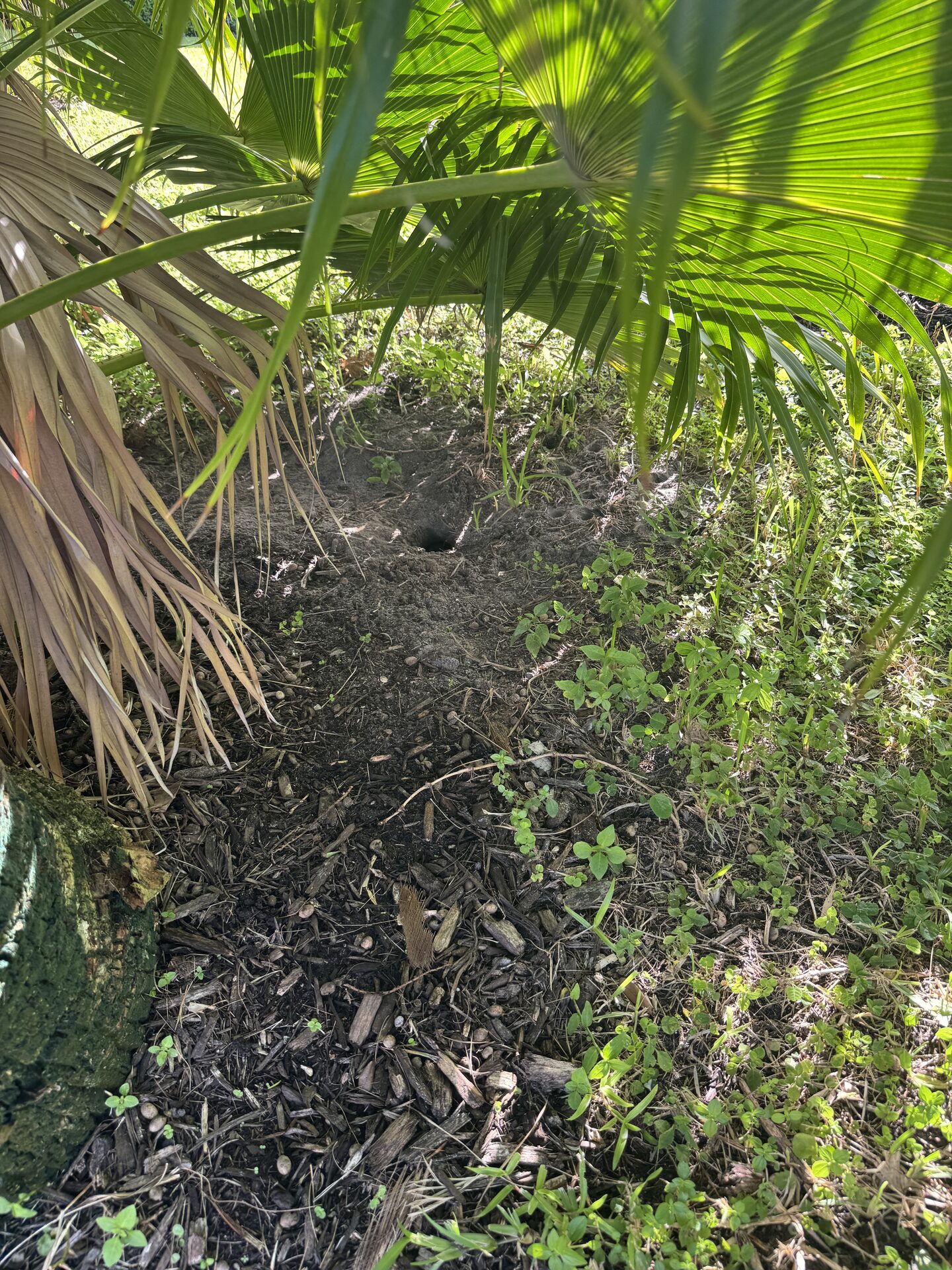
Every homeowner who calls us wants to know the same thing: how much does iguana removal cost? The honest answer is that it depends on your property, the severity of the problem, and the methods needed to solve it. No two properties are the same, and quoting a flat price without seeing the lot would be misleading. What we can tell you is what drives the cost, why one-time removal rarely works, and what questions to ask any company before you hire them.
Factors That Affect Cost
Iguana removal pricing is shaped by several variables. Understanding these factors will help you make sense of any quote you receive.
- Property size: A small residential lot takes less time to inspect and service than a large waterfront estate or a multi-acre HOA property. Bigger properties require more time, more equipment, and more frequent visits.
- Waterfront vs inland: Waterfront properties on canals, lakes, or the Gulf are prime iguana territory. The soft soil near seawalls and the basking spots on docks make these properties more attractive to iguanas, which means more activity and more work to control.
- Number of iguanas: A property with two or three iguanas is a different job than a property with a colony of fifteen or twenty. Population size affects how many visits are needed and how quickly the population can be brought under control.
- Burrow damage extent: If iguanas have already established burrows under your seawall, foundation, or pool equipment pad, the burrows need to be excavated and backfilled. This is labor-intensive work that goes beyond simple removal.
- Frequency of visits needed: Some properties need weekly suppression. Others can be managed with biweekly or monthly visits. The frequency depends on how much pressure the property is under from neighboring iguana populations.
- HOA vs residential: HOA properties often involve common areas, shared seawalls, and community infrastructure. These jobs are larger in scope and may require coordination with the board or property manager.
Why One-Time Removal Rarely Works
This is the most important thing to understand about iguana removal cost: a one-time visit will not solve your problem. Iguana populations rebound within weeks without ongoing suppression. Here is why.
When you remove iguanas from a property, you create a vacuum. Neighboring iguanas, attracted by the same food, warmth, and burrow-ready soil, move in to fill it. Burrows that were occupied get reopened by new animals. During nesting season, which runs April through October, females lay 30 to 70 eggs per clutch. A single unmanaged female can produce dozens of hatchlings that mature and stay on or near your property.
One-time removal is like mowing your lawn once. The grass grows back. The only way to keep an iguana population under control is ongoing, systematic suppression that removes new arrivals before they establish themselves.
What Ongoing Suppression Includes
A proper ongoing suppression plan is not just someone showing up with a trap. It is a structured program that includes:
- Weekly visits: Regular property sweeps to remove active iguanas before the population rebuilds.
- Burrow checks: Inspection of known burrow locations to see if they have been reopened or if new burrows have appeared.
- Nesting season sweeps: Focused removal during April through October when females are actively nesting. Removing breeding females before they lay eggs prevents the next generation.
- Hot spot mapping: Tracking where iguanas are concentrated on the property so visits are efficient and targeted.
- Documentation: Records of what was removed, where, and when, so you can see the progress over time.
This is the work that actually controls an iguana population. It is also the work that most one-time operators skip.
Questions to Ask Any Iguana Removal Company
Before you hire anyone to remove iguanas from your property, ask these questions. The answers will tell you whether you are dealing with a professional or someone who will trap a few iguanas and leave.
- Are you FWC-permitted? A Conditional/Prohibited/Nonnative Species Permit from the Florida Fish and Wildlife Conservation Commission is required for legal iguana removal. If they cannot answer this with a clear yes, do not hire them.
- Are you licensed and insured? This protects you if something goes wrong on your property.
- Do you do burrow remediation or just trapping? If they only trap, the burrows under your seawall or foundation will remain a problem. Full excavation and backfill is essential.
- Do you offer ongoing suppression? If they do not, the iguanas will come back. Ask about visit frequency and what each visit includes.
- Can you provide monthly reporting? A legitimate operator tracks their work and can show you results.
- What methods do you use? Methods should be humane and within FWC rules. No poisons, because no poisons are legal for iguanas in Florida.
Why Rocky's Offers Free Inspections
We do not quote prices over the phone because we cannot assess your property without seeing it. A free inspection lets us walk the lot, identify burrows, count active iguanas, and understand the conditions driving the problem. Only then can we recommend a plan and tell you what it will cost.
There is no pressure and no obligation. You get an honest assessment and a clear plan. If you decide to move forward, we schedule service. If you do not, you still walk away with a clear understanding of what is happening on your property.
Schedule Your Free Inspection
If you want a real answer to the cost question, the first step is a free property inspection. Rocky's Cane Toad and Iguana Management serves Naples, Fort Myers, Cape Coral, Bonita Springs, Estero, Port Royal, Sanibel, and Captiva. Call (239) 922-5992 to schedule your inspection. Same-day response and 24/7 emergency service available.