
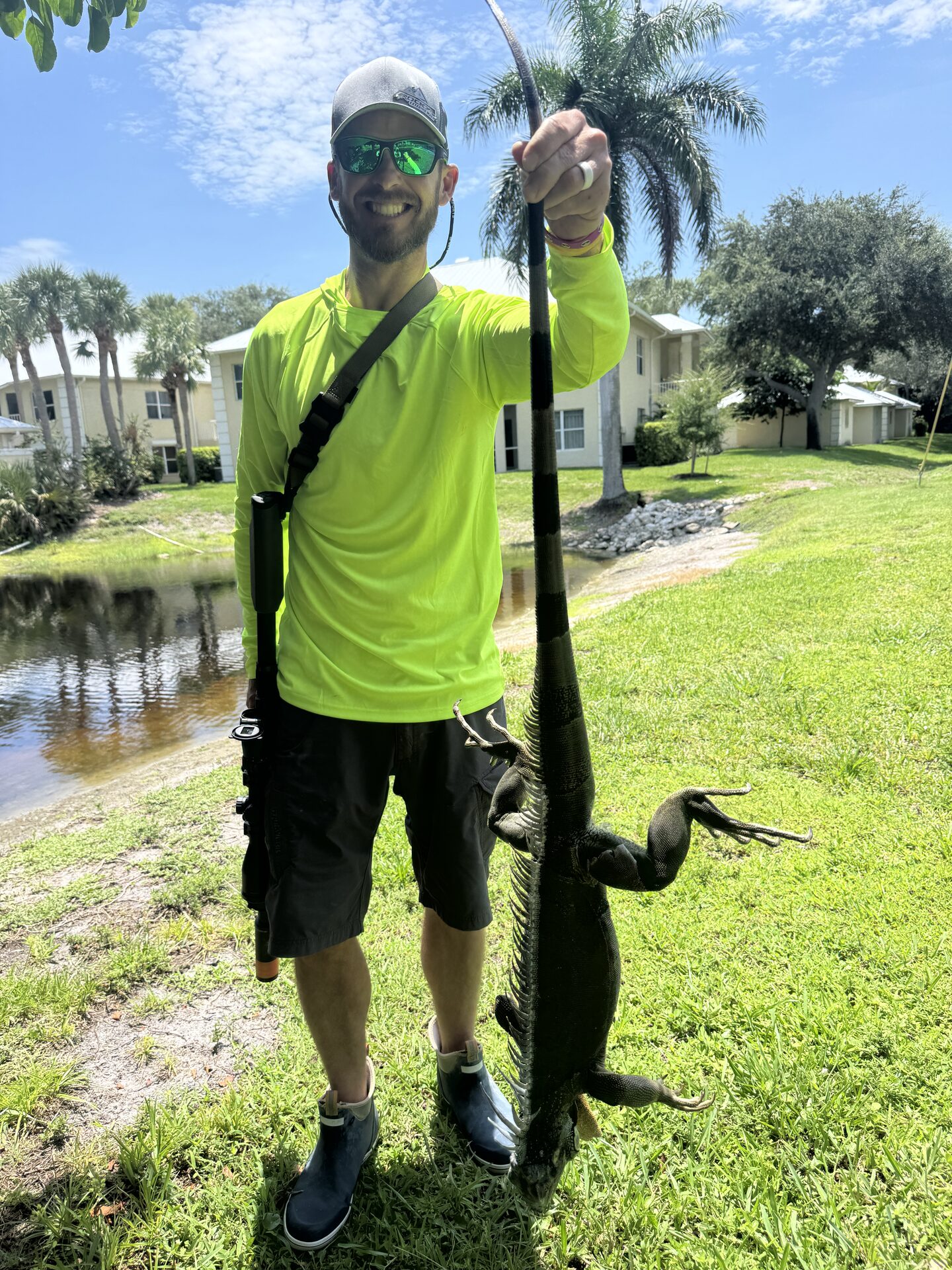
Green iguanas are a year-round problem in Southwest Florida, but their behavior changes dramatically with the seasons. Understanding when they are most active, where they go during the day, and what attracts them to your property is the first step in keeping them away. Whether you live on a canal in Cape Coral or a golf course in Naples, iguanas follow predictable patterns. Once you know those patterns, you can stay ahead of the damage.
Iguana Seasonality in SWFL
Iguana activity in Southwest Florida follows a clear seasonal cycle driven by temperature, rainfall, and breeding instincts. Knowing what is happening in each season helps you time your prevention efforts.
Nesting Season (April through October)
This is when iguana activity peaks. Females dig burrows to lay eggs, with 30 to 70 eggs per clutch. These burrows are often dug into seawall bases, canal banks, and soft landscaping soil, which is exactly where the most expensive property damage occurs. Males become territorial and aggressive during this period, patrolling their area and challenging other males. If you are going to see iguanas on your property, this is when you will see the most of them.
Mating Season (peaks in April and May)
Mating season overlaps with the start of nesting. Males display brighter colors, bob their heads rapidly, and fight other males for territory and access to females. This is when you will see the most iguana activity around waterfront properties. The increased movement and aggression mean more burrows, more damage to landscaping, and more sightings on seawalls and docks.
Hatching Season (June through October)
Eggs hatch after about 90 days of incubation, with the first juveniles appearing in early summer and continuing through fall. Juvenile iguanas disperse quickly, looking for new territory. That means new burrows on new properties, often in areas that had no iguana activity before. A property that was clean in May can have juvenile iguanas establishing burrows by August.
Dry Season (November through March)
Iguanas are less active in the dry season but they do not disappear. They retreat to burrows during cold snaps, and iguanas can become sluggish or immobile when temperatures drop below 50 degrees. On warm winter days, they come out to bask in the sun. Many homeowners assume iguanas are gone in winter, only to find the burrows are still occupied. The population is still there, just less visible.
Daily Behavior: What Iguanas Do All Day
Iguanas are cold-blooded, which means their body temperature depends on their environment. Their entire daily routine is built around managing heat. Understanding this routine helps you predict where they will be and when.
Morning
Iguanas emerge from their burrows at first light and bask in the sun to raise their body temperature. You will find them on seawalls, docks, rooftops, and tree branches facing east to catch the morning sun. They are slow and docile during this time, which makes morning one of the best windows for removal.
Midday
Once warmed up, iguanas become active. This is when feeding, mating, and territory patrols happen. It is also when they do the most landscaping damage, stripping leaves and flowers from plants. They can travel significant distances between feeding and basking spots, so an iguana you see on your dock at noon may be feeding in a neighbor's garden by afternoon.
Afternoon
They continue feeding and basking through the afternoon. On very hot days, when temperatures climb above 90 degrees, iguanas may retreat to shade or burrows to avoid overheating. This is why you sometimes see them disappear during the hottest part of the day, only to reappear in the late afternoon.
Evening
Iguanas return to their burrows before dark. They are diurnal, meaning they are active during the day, not nocturnal. Once the sun goes down, they are in their burrows for the night. This is important for removal. Burrow checks are most effective at dawn or dusk, when iguanas are entering or exiting. If you check a burrow at noon, it may look empty even if it is occupied.
Where to Find Iguanas in Southwest Florida
Iguanas concentrate wherever there is water access, soft soil for burrowing, and mature vegetation. Here is where they are most common across SWFL:
- Naples: Seawalls along Gordon Drive and Port Royal, golf courses (especially bunker banks and lake edges), and canal-front homes in North Naples.
- Fort Myers: Caloosahatchee River waterfront, McGregor Boulevard's canopy of trees, and golf communities.
- Cape Coral: The 400-plus miles of canals make this ground zero for iguanas. Every seawall is a potential burrow site.
- Sanibel and Captiva: Beach dunes, mangrove edges, and preserve areas.
- Bonita Springs: Imperial River waterfront and golf course communities.
- Estero: Creek banks, wetland edges, and fast-growing developments pushing into natural habitat.
In general, any property with water access, mature trees (especially ficus, hibiscus, and mango), seawalls, and soft soil for burrowing is a prime target. If your property has two or more of these features, iguanas will find it.
What Iguanas Eat
Iguanas are herbivores, and they are not picky. If you have lush landscaping or a garden, your property is a feeding ground. A single adult iguana can eat several pounds of vegetation per day.
Their favorite plants include:
- Hibiscus, orchids, bougainvillea, impatiens, and roses
- Fruits like mangoes, figs, and berries
- Vegetables like tomatoes, squash, and leafy greens
- Grasses, weeds, and ornamental grasses
Iguanas prefer tender new growth and flowers over tough mature leaves. This is why freshly planted landscaping and blooming flowers are often the first things to get stripped. They are opportunistic feeders. If it is green, growing, and accessible, they will eat it. A garden or lush landscaping is not just attractive to iguanas, it is an open invitation.
How to Deter Iguanas From Your Property
Deterring iguanas requires a combination of habitat modification, physical barriers, and professional removal. No single tactic works on its own.
Remove Food Sources
Replace iguana-favorite plants with resistant alternatives. Good options include oleander, milkweed, crotons, citrus, jasmine, and society garlic. If iguanas cannot find food on your property, they are less likely to stick around.
Install Physical Barriers
Fencing or mesh around gardens and vulnerable areas can prevent iguanas from reaching your plants. Barriers should extend below ground to prevent burrowing underneath. A fence that only covers the surface will not stop an iguana from digging under it.
Fill Existing Burrows
Once iguanas are removed, burrows must be fully excavated and backfilled with compacted soil. Just filling the entrance does not work. Iguas will reopen the burrow or dig a new one right next to it. Proper burrow remediation means collapsing the entire tunnel system and packing the soil so it cannot be re-dug.
Remove Basking Spots
Clear seawall caps, dock surfaces, and rock piles where iguanas sun themselves. If you remove the places they use to warm up in the morning, they will look for another location.
Use Deterrents
Motion-activated sprinklers, reflective surfaces, and iguana repellent sprays can help in the short term. These tools may startle iguanas enough to make them move, but they are not a substitute for removal. Iguas are persistent and will often return once they get used to the deterrent.
Professional Removal
The most effective approach is professional trapping and removal combined with ongoing suppression. DIY methods rarely work long-term because iguanas are persistent and territorial. A single trapping visit will not solve the problem if new iguanas move in from neighboring properties. Ongoing suppression keeps the population from reestablishing.
Do Not Wait for Nesting Season to Act
Iguanas are a year-round problem in SWFL, but understanding their seasonal patterns and daily behavior helps you stay ahead of the damage. If you wait until nesting season to act, burrows are already established, eggs are already in the ground, and the population on your property is already growing. The best time to address an iguana problem is before it becomes visible.
If you are seeing iguanas on your property, do not wait. Call Rocky's Cane Toad and Iguana Management for a free inspection. We will assess your property, identify active burrows, and build a removal and suppression plan tailored to your location. Call (239) 922-5992 or request an inspection online today.