
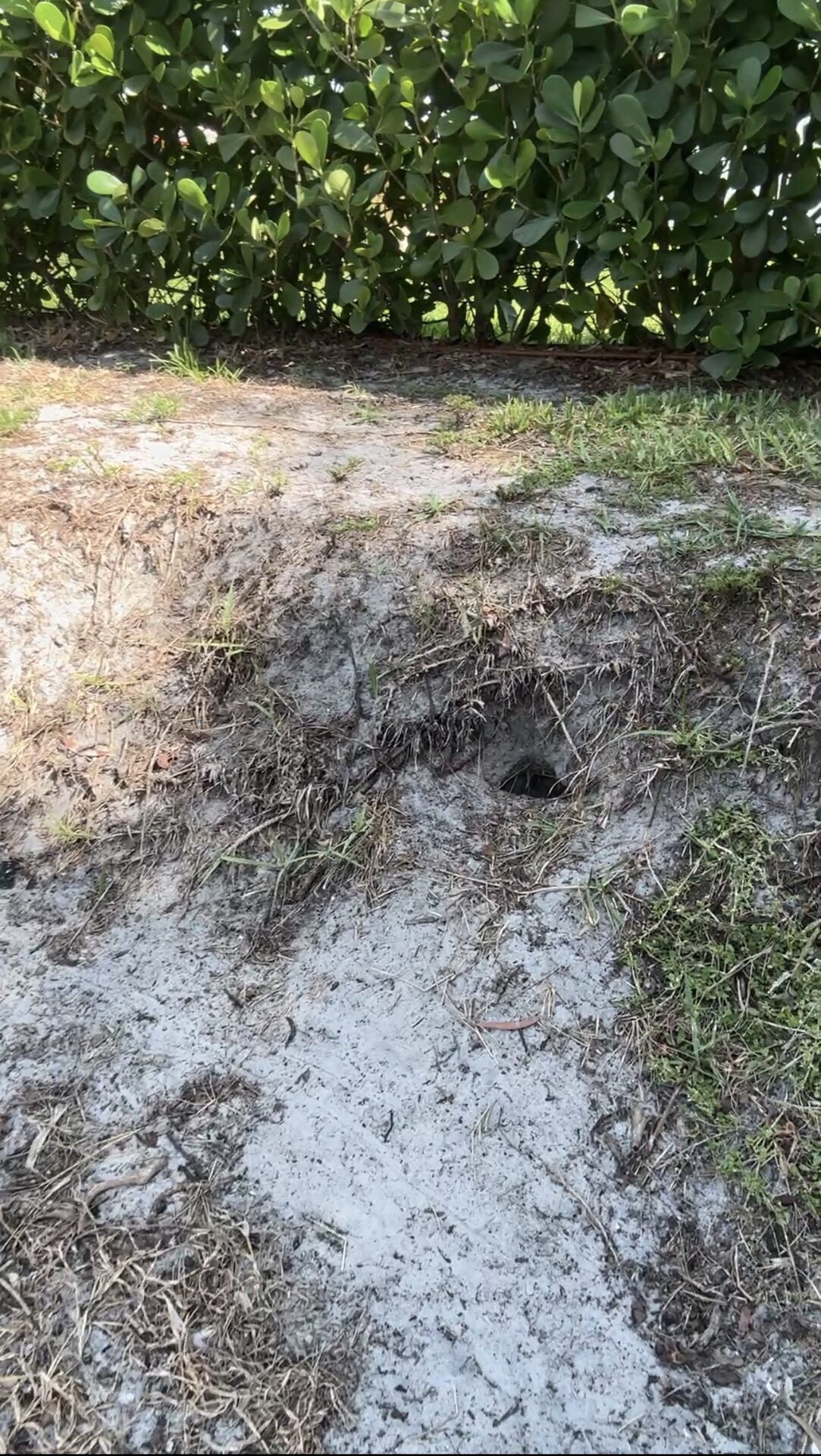
Iguana infestations are a growing problem for Florida communities, and one of the first questions HOA boards and homeowners ask is simple: who pays for removal and damage repair? The answer depends on your HOA governing documents, your property insurance policy, and where the iguana damage is located. This article is a general overview, not legal advice. Always consult your specific HOA documents and insurance policy for exact coverage details.
HOA Coverage: Common Areas vs Unit Owner Property
For HOA-governed communities, the starting point is your declaration of covenants, conditions, and restrictions (CC&Rs). Most HOA documents draw a line between common areas and unit owner property. That line determines who is responsible for iguana removal.
In general, HOAs cover iguana removal and damage repair in common areas. This includes community entrances, shared landscaping, lakes, seawalls along common property, and amenity areas like clubhouses and pool decks. The HOA budget covers these costs because the land belongs to the association and all members benefit from maintaining it.
Unit owner property is typically the owner's responsibility. If iguanas are burrowing under a privately owned patio, nesting in a backyard, or damaging landscaping that the HOA does not maintain, the unit owner pays for removal. Some HOAs offer assistance programs or have a preferred vendor, but the cost usually falls on the owner.
However, every HOA is different. Some communities cover more than the minimum, especially if iguana activity on private property threatens shared infrastructure. Read your CC&Rs carefully and ask your property manager if you are unsure where the line falls.
Property Insurance: What Most Policies Cover and Exclude
Standard homeowners insurance policies in Florida generally exclude damage caused by pests, rodents, and wildlife. Iguanas fall into this category for most insurers. Here is how it typically breaks down:
- Wildlife and pest damage exclusion: Most policies do not cover damage caused by animals, including burrowing, nesting, or waste contamination. Iguana burrows that undermine a seawall or foundation may be excluded under this clause.
- Sudden vs gradual damage: Insurance policies often cover sudden, accidental damage but not gradual deterioration. Iguana burrow damage develops slowly over months or years, which means it usually falls under gradual wear and tear, not a covered event.
- Seawall and structure damage: If an iguana burrow causes a seawall to crack or collapse, some policies may cover the structural repair if the damage is sudden, but the burrow itself and the removal work are often excluded.
- Contamination cleanup: Damage from iguana droppings, including bacteria and salmonella contamination, is typically excluded under standard pest and waste damage clauses.
The key takeaway: do not assume your insurance will cover iguana removal or burrow damage. Check your specific policy, look for wildlife and pest exclusions, and ask your agent directly. Some insurers offer endorsements or riders that expand coverage, but these are not standard.
Who Pays for What: Common Area vs Unit Owner
The responsibility split comes down to location and ownership:
- HOA pays: Iguana removal in common areas, burrow remediation on shared property, seawall repair on association-owned seawalls, and damage to community landscaping.
- Unit owner pays: Iguana removal on private property, burrow remediation under private patios or lanais, damage to privately owned landscaping, and contamination cleanup on unit owner property.
- Gray areas: Seawalls that serve as both community and private property boundaries, shared fences, and landscaping that borders common areas. These cases require a careful review of the HOA documents.
Why Documenting Iguana Damage Matters
If you plan to file an insurance claim or request HOA funding for iguana damage, documentation is critical. Take clear photos of burrows, damaged structures, droppings, and visible iguana activity. Note dates and locations. Keep records of any professional removal or repair work already done.
Good documentation helps in two ways. First, it gives your insurance adjuster or HOA board concrete evidence of the problem and its cause. Second, it establishes a timeline showing the damage was caused by iguanas, not by neglect or another source. Without documentation, claims are easier to deny.
Recommendation: Treat Iguana Removal as Proactive Maintenance
The most cost-effective approach for HOA boards is to treat iguana removal as routine maintenance, not as a reactive expense after damage occurs. Here is why:
- Lower total cost: Ongoing suppression and removal cost far less than repairing seawall damage, replacing landscaping, or fixing structural problems caused by burrows.
- Fewer disputes: When the HOA proactively manages iguana activity, there is less conflict over who pays for what after damage appears.
- Property values: Visible iguana damage lowers curb appeal and can affect property values. Proactive management protects the community's appearance and marketability.
- Budget predictability: Including iguana management in the annual budget makes costs predictable instead of reactive.
If your HOA board is debating whether to budget for iguana removal, consider the alternative. Waiting until burrows undermine a seawall or iguana populations explode across the community means higher costs, more damage, and harder decisions. Proactive removal is the smarter financial choice.
Talk to a Professional About Your Situation
Every community and property is different. The best way to understand your options is to schedule a free property inspection. Rocky's Cane Toad and Iguana Management works with HOA boards, property managers, and individual homeowners across Southwest Florida. We can assess the scope of iguana activity on your property, explain what removal and prevention look like, and help you plan a budget that fits your community.
Call (239) 922-5992 to schedule a free inspection. We serve Naples, Fort Myers, Cape Coral, Bonita Springs, Estero, Port Royal, Sanibel, and Captiva. Licensed, insured, and FWC-permitted.
About the Author
Chris "Rocky" Rockwell
Owner
Rocky's Cane Toad and Iguana Management, LLC
Naples, FL
Frequently Asked Questions
Does HOA cover iguana removal?
In most cases, HOAs cover iguana removal in common areas like community entrances, shared landscaping, lakes, and amenity spaces. Removal on unit owner property is typically the owner's responsibility. Check your HOA's CC&Rs for the exact coverage line.
Will my homeowners insurance pay for iguana damage?
Most standard homeowners insurance policies exclude damage caused by wildlife and pests, including iguanas. Burrow damage and contamination from droppings are usually not covered. Review your specific policy and ask your agent about wildlife exclusions.
Who is responsible for iguana removal in a condo?
Responsibility depends on where the iguanas are located. The HOA typically handles common areas, while the unit owner handles private property. Shared structures like seawalls may fall into a gray area that requires reviewing the HOA documents.
Does insurance cover iguana burrow damage to seawalls?
Generally no. Most policies exclude gradual damage from wildlife burrowing. If a seawall collapses suddenly, some structural repair may be covered, but the burrow removal and iguana trapping are typically excluded. Check your policy for specifics.
Should an HOA include iguana removal in the budget?
Yes. Treating iguana removal as proactive maintenance is more cost-effective than waiting for damage. Ongoing suppression prevents burrow damage to seawalls and infrastructure, reduces disputes, and keeps costs predictable in the annual budget.