
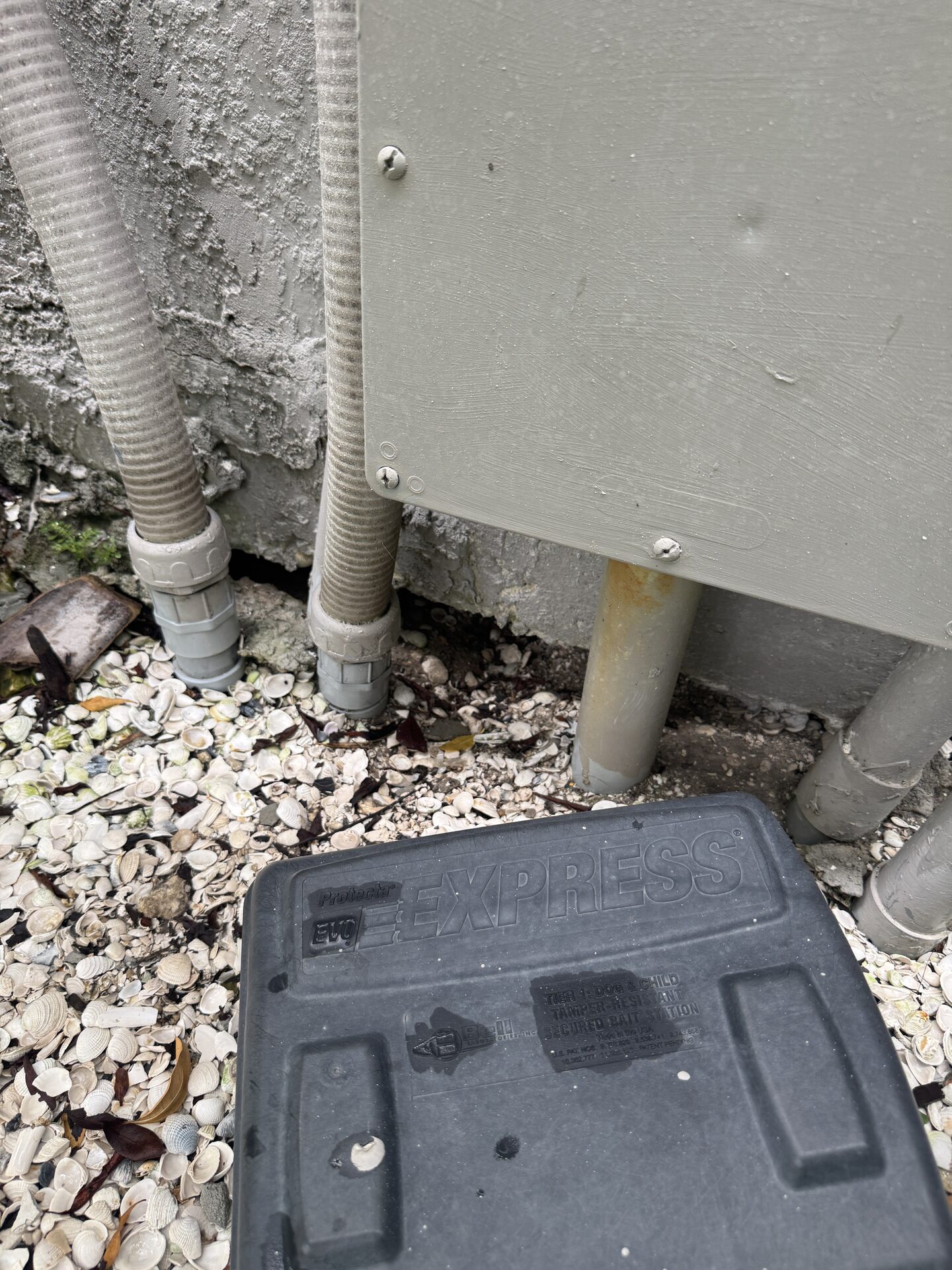
The first sign of an iguana problem is usually a hole in the ground that was not there before. But not every hole is an iguana burrow. Knowing how to identify iguana burrows early can save you thousands of dollars in structural damage.
What an Iguana Burrow Entrance Looks Like
Iguana burrow entrances are typically 6 to 12 inches in diameter, roughly the size of a softball. The opening may be surrounded by freshly dug soil that is lighter in color than the surrounding ground. Unlike animal burrows from armadillos or rats, iguana burrow entrances are usually clean and rounded, without scattered debris.
Where to Look for Iguana Burrows
Iguanas prefer to dig where there is soft soil and a solid structure overhead. Check these areas on your property:
- Behind seawalls: The most common location on waterfront properties. The soft soil and solid wall make ideal burrow conditions.
- Under house foundations and slabs: Iguanas dig under the footing where the soil is loose from construction backfill.
- Near pool equipment pads: The concrete pad provides a solid roof, and the surrounding soil is easy to dig.
- Along lake banks and canal banks: Soft waterfront soil with easy access to water.
- In beach dunes: Especially on Sanibel and Captiva, where dunes provide soft sand and cover.
- Under decks and patios: The structure above provides shelter and the soil below is often soft.
- Near dense vegetation: Thick landscaping provides cover and a food source nearby.
Other Signs of an Active Iguana Burrow
A burrow entrance is the most obvious sign, but there are other indicators:
- Droppings near the entrance: Iguana droppings are dark, elongated, and often found near the burrow opening.
- Smooth, worn path to the entrance: Repeated use creates a visible path from the burrow to basking or feeding areas.
- Sunbathing iguanas nearby: If you see iguanas basking on your seawall, dock, or roof, there is likely a burrow within 20 feet.
- Stripped landscaping nearby: Iguanas eat vegetation close to their burrow. If plants near a hole are being eaten, the burrow is active.
- Cracks in nearby hardscape: Unexplained cracks in your pool deck, driveway, or patio can indicate a void below from a burrow.
How Deep Do Iguana Burrows Go?
This is what makes iguana burrows so dangerous. The entrance may look like a simple hole, but the tunnel extends 6 feet deep and 80 feet long underground. The burrow is not a single tunnel. It can have multiple chambers and branches, creating a extensive void beneath your property.
What to Do If You Find a Burrow
Do not try to fill the entrance yourself. The tunnel extends far underground, and filling only the entrance leaves the void intact. Iguanas will reopen the burrow or dig a new entrance nearby. You need professional burrow remediation.
Rocky's excavates the full burrow, removes any iguanas still inside, backfills with compacted soil, and assesses the surrounding structures for damage. We serve Naples, Fort Myers, Cape Coral, Bonita Springs, Estero, Port Royal, Sanibel, and Captiva. Free property inspections. Call (239) 922-5992 or visit iguanaswfl.com.