
You walk out to the pool with your morning coffee and there it is: a green iguana, paddling around like it owns the place. Or worse, you find droppings on the pool steps and screen tears you did not cause yesterday.
This scene plays out every day across Naples, Bonita Springs, Estero, Marco Island, Fort Myers, and Sanibel. If you are searching for "iguana in pool Naples FL" or "iguana removal Southwest Florida", you are not alone. Iguanas love pools, pool cages, and the warm spaces inside your roof. Here is what is happening and what you can do about it.
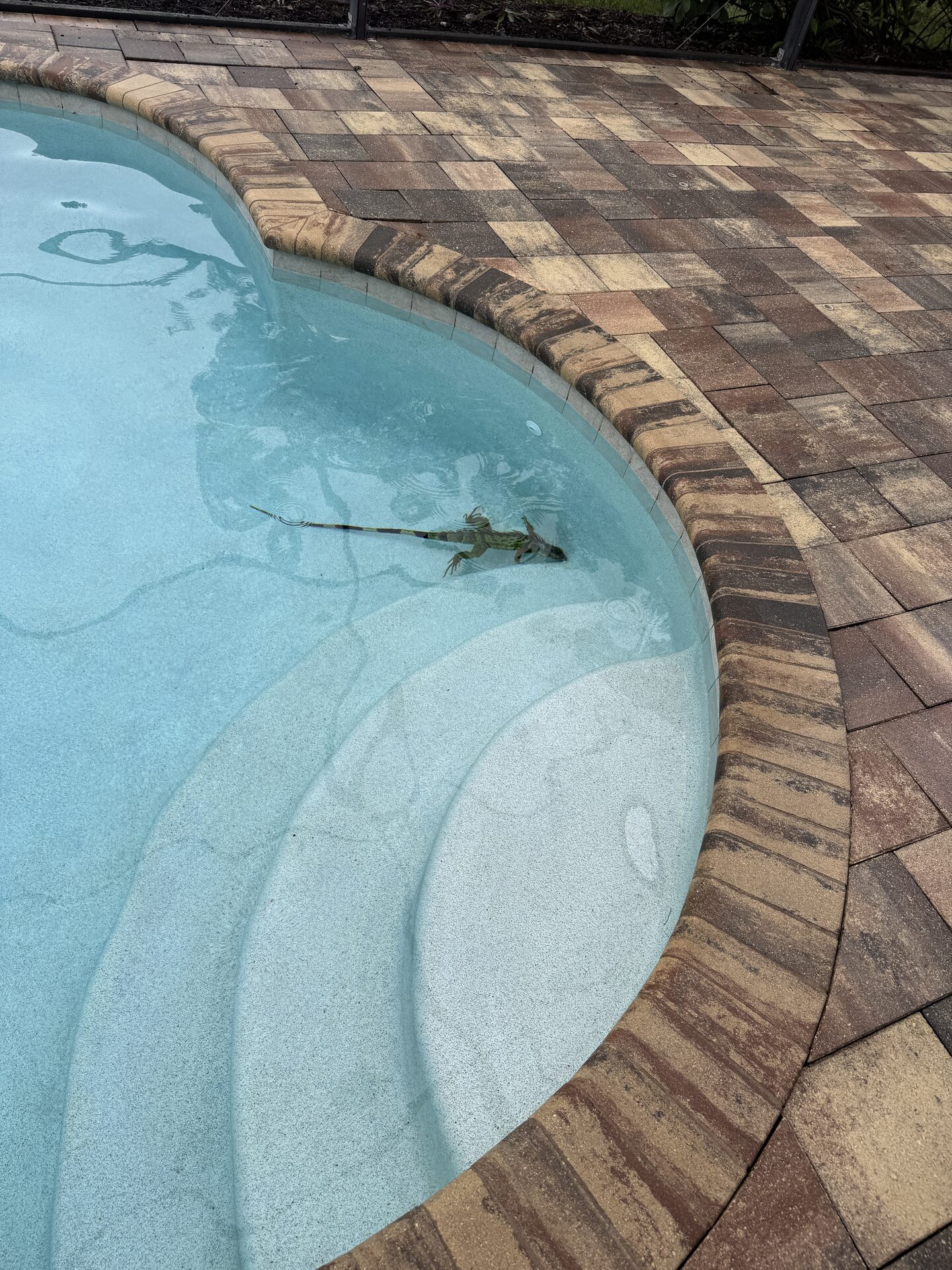
Can Iguanas Swim?
Yes. Green iguanas are strong, natural swimmers. They tuck their legs against their body and push themselves through the water with their powerful tail. To an iguana, your swimming pool is just another pond.
In the wild, iguanas live near canals, lakes, and retention ponds across Collier County and Lee County. They use water to cool down, drink, and escape predators. A backyard pool checks every one of those boxes. If you live near a canal, a golf course lake, or a retention pond in Naples or Fort Myers, iguanas already live nearby. Your pool is an easy detour.
How Long Can an Iguana Hold Its Breath?
This is one of the most common questions I get from homeowners. Iguanas can hold their breath for a long time. Commonly cited figures put it at up to about 30 minutes, though I would not treat that as a hard number.
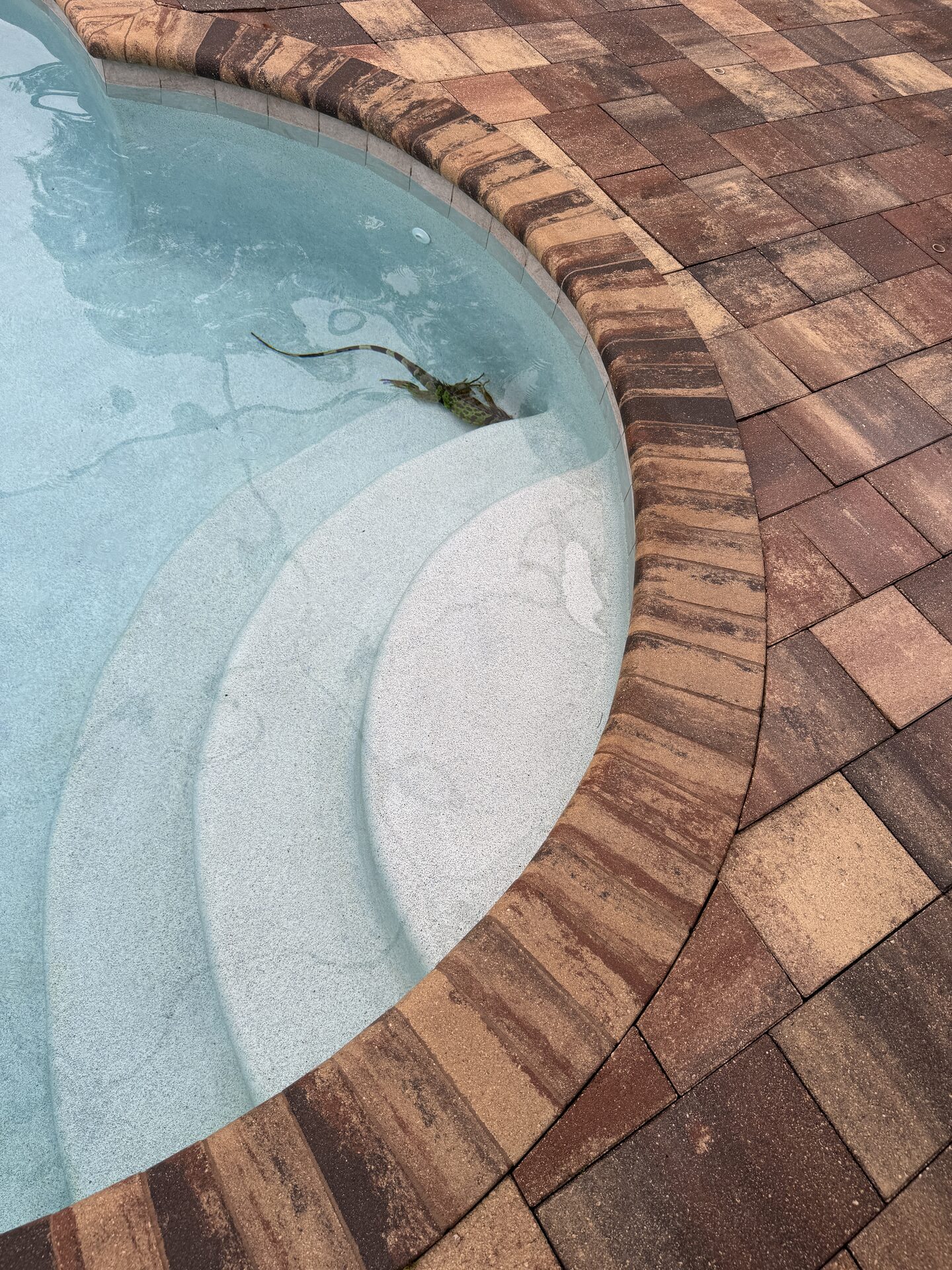
Here is the important part: if you walk out to your pool and an iguana dives underwater, it has not drowned. It is using the water to hide from you. It will stay down, wait for you to leave, and then pop back up. I have seen homeowners panic thinking the iguana is dead, only for it to surface 15 minutes later and climb out.
Saltwater Pools vs. Chlorine Pools: Does Either One Keep Iguanas Away?
No. Neither one will stop iguanas from using your pool. Here is why:
- A saltwater pool is a chlorine pool. The salt cell converts dissolved salt into chlorine through electrolysis. So a "saltwater" pool still has chlorine in it. It is just generated differently.
- Iguanas handle salt. Green iguanas have special salt glands on their nose that filter out excess sodium. They literally sneeze out salt crystals. So the salinity of a saltwater pool does not bother them at all.
- Standard chlorine levels will not drive them off either. Normal pool chlorine is not strong enough to irritate iguana skin at the concentrations you maintain for swimming.
The real issue is not the water. It is the droppings. Iguanas often defecate in or near water. Reptile droppings can carry Salmonella, and contaminated pool water is a health risk for you, your kids, and your pets.
If you find iguana droppings in your pool, here is what to do:
- Remove the droppings with a pool net. Wear gloves.
- Shock the pool to raise the sanitizer level.
- Run the filter for a full cycle.
- Test the water and confirm sanitizer levels are back to normal before anyone swims.
- Follow CDC guidance for fecal incidents in pools for the most thorough cleanup.
I am not going to give you specific chemical numbers because every pool is different. If you are unsure, call your pool service company and tell them you had a wildlife contamination event.
Can Iguanas Climb Pool Cages and Screen Enclosures?
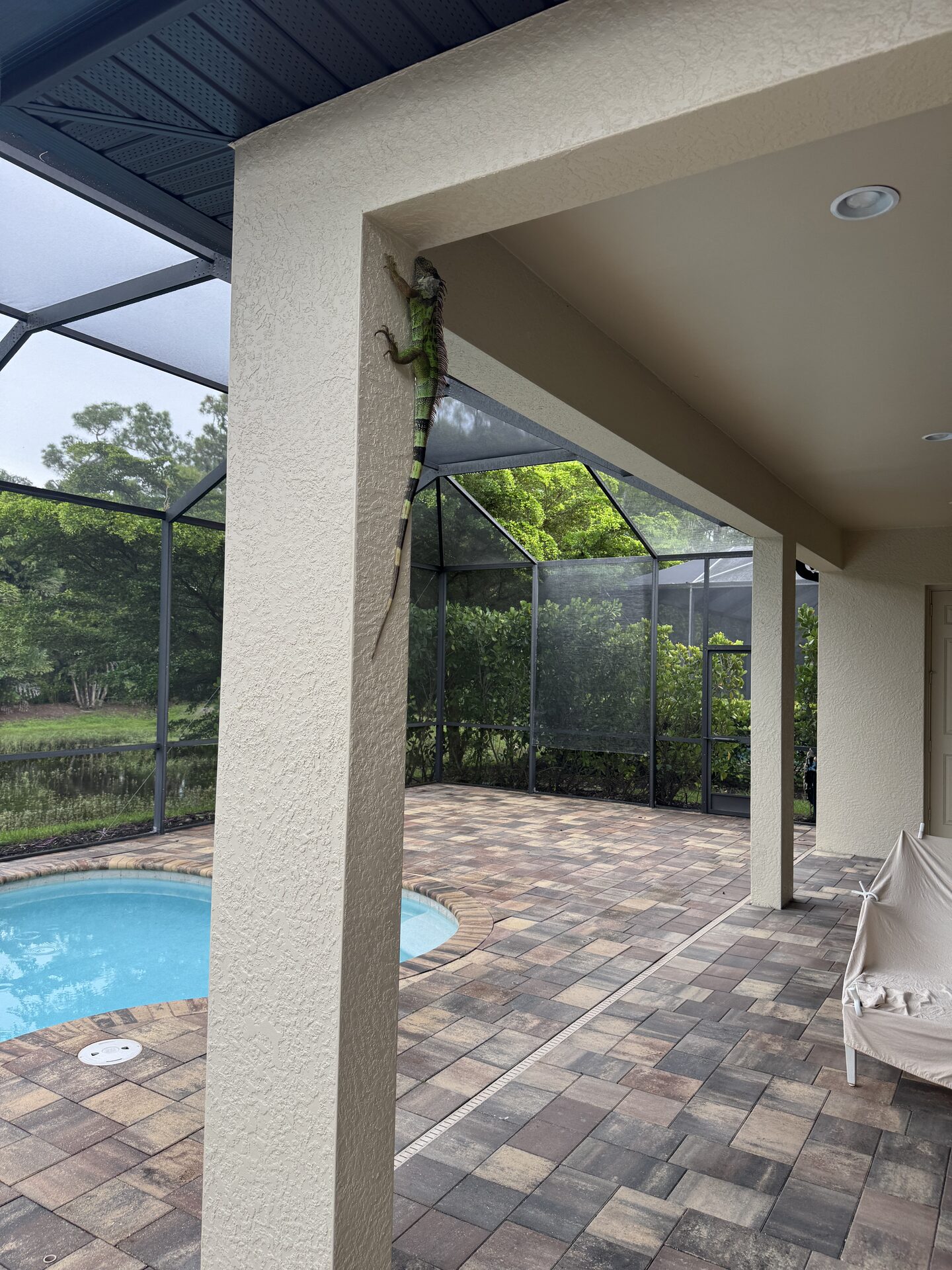
Yes, and they do it all the time. Their sharp claws grip screen mesh and aluminum framing easily. Once they grab the frame, they climb it like a ladder.
This is where iguana pool enclosure damage starts. Iguanas tear screens getting in and out of the cage. They lean on the screen, their claws puncture the mesh, and suddenly you have holes that let bugs and debris in. If you have seen torn screens around your pool cage with no obvious cause, iguanas are a likely culprit.
From the Pool Cage to Your Roof: How Iguanas Get Into Air Vents, Attics, and Your House
This is the part that surprises most homeowners. The pool cage is not the end of the story. The aluminum frame of your screen enclosure often connects to or rests right against your roofline. An iguana that climbs the cage can get onto your roof.
Once they are on the roof, they find gaps:
- Soffit vents along the eaves
- Gaps under barrel-tile or flat-tile roofs
- Dryer vent exits on exterior walls
- Bathroom exhaust vent openings
- Attic vents and gable openings
From any of those entry points, iguanas can get into your attic. I have pulled iguanas out of attics across Naples and Fort Myers. The damage they cause inside includes:
- Chewed screens and vent covers
- Droppings piled in the attic insulation (Salmonella risk inside your home)
- Blocked vents that reduce airflow and can cause moisture problems
- Smell that builds up in the attic and can waft into the living space
- Nesting behavior during breeding season (they dig and tunnel in insulation)
If you are hearing scratching in the ceiling, seeing droppings near vent openings, or smelling something unusual from the attic, iguanas on your roof may have already found their way inside.
Other Damage: Burrows, Seawalls, and Landscaping
Pool access and roof entry are not the only problems. Iguanas also cause structural damage around your property:
- Burrowing under pool decks and sidewalks. Iguana burrows can go 6 feet deep and 80 feet long. When they tunnel under a pool deck or lanai slab, the concrete can crack, settle, and shift. That repair is not cheap.
- Burrowing under seawalls. In waterfront homes from Port Royal to Sanibel, iguana burrows undermine seawall footings. A compromised seawall can cost tens of thousands to repair.
- Eating landscaping. Iguanas devour hibiscus, orchids, bromeliads, and other common SWFL plants. A mature iguana can strip a shrub in a single afternoon.
What Homeowners Should (and Should Not) Do
Here are steps that actually help:
- Repair torn screens right away. Every hole is an invitation.
- Trim branches that touch or overhang your pool cage and roof. Iguanas use branches as bridges.
- Screen your vents. Hardware cloth over soffit, gable, and exhaust vents stops iguanas from entering the attic.
- Do not feed iguanas. Feeding them trains them to see your yard as a food source.
- Remove droppings promptly and disinfect the area.
What you should not do is try to remove iguanas yourself without knowing the law. Iguana removal in Florida must be humane and must follow FWC rules and local ordinances. Green iguanas are classified as a Prohibited species by the Florida Fish and Wildlife Conservation Commission. Relocating them is illegal statewide. A licensed professional with the right FWC permits is the safest and most effective choice.
Professional Iguana Removal in Naples and Southwest Florida
My name is Chris Rockwell, and I own Rocky's Cane Toad and Iguana Management, LLC. We are based in Naples and serve homeowners, HOAs, condo associations, and golf courses across Collier County and Lee County, including Bonita Springs, Estero, Fort Myers, Sanibel, and Captiva.
Here is what sets us apart:
- Licensed and insured with a Conditional/Prohibited/Nonnative Species Permit from the Florida Fish and Wildlife Conservation Commission
- Humane, Florida-compliant methods for capture and removal
- Same-day response available and 24/7 emergency response for urgent situations
- Free property assessments so you know exactly what you are dealing with
- HOA-compliant documentation for community managers and boards
One more thing: if your pool deck, lanai, or driveway needs pressure washing after iguana droppings, we offer a 10% bundle discount when you book iguana removal together with Rocky's Exterior Wash. That cleanup pairs naturally with iguana removal because droppings are the messiest part of the job.
Call or text (239) 922-5992 or fill out the form on our contact page to schedule your free inspection.
Frequently Asked Questions
Can iguanas swim in pools?
Yes. Green iguanas are strong swimmers. They tuck their legs and propel themselves with their tail. A residential pool is easy for them to navigate.
How long can an iguana hold its breath underwater?
Commonly cited as up to about 30 minutes. If an iguana dives when you approach, it is hiding, not drowning. It will surface once you leave.
Do saltwater pools keep iguanas away?
No. A saltwater pool is still a chlorine pool, and iguanas have salt glands that handle excess salt. Neither salt nor standard chlorine levels will deter them.
Can iguanas climb pool cages and screen enclosures?
Yes. Their claws grip screen mesh and aluminum framing. They tear screens and use the frame as a ladder to reach the roof.
How do iguanas get into your attic or house?
They climb from the pool cage to the roof, then enter through soffit vents, gaps under roof tiles, dryer vents, bathroom exhaust vents, and attic openings. Droppings in the attic create odor and Salmonella risks.
What should I do if I find an iguana in my pool?
Do not grab it with bare hands. Remove droppings with a net and gloves, shock the pool, run the filter, and test the water before swimming. Then call a licensed professional at (239) 922-5992 to remove the iguanas and prevent them from returning.
Owner, Rocky's Cane Toad and Iguana Management, LLC - Naples, FL
Chris is a Naples-based wildlife management professional specializing in humane iguana and cane toad removal. Licensed and insured with FWC permits, he serves homeowners, HOAs, and golf communities across Southwest Florida. Call or text (239) 922-5992.