
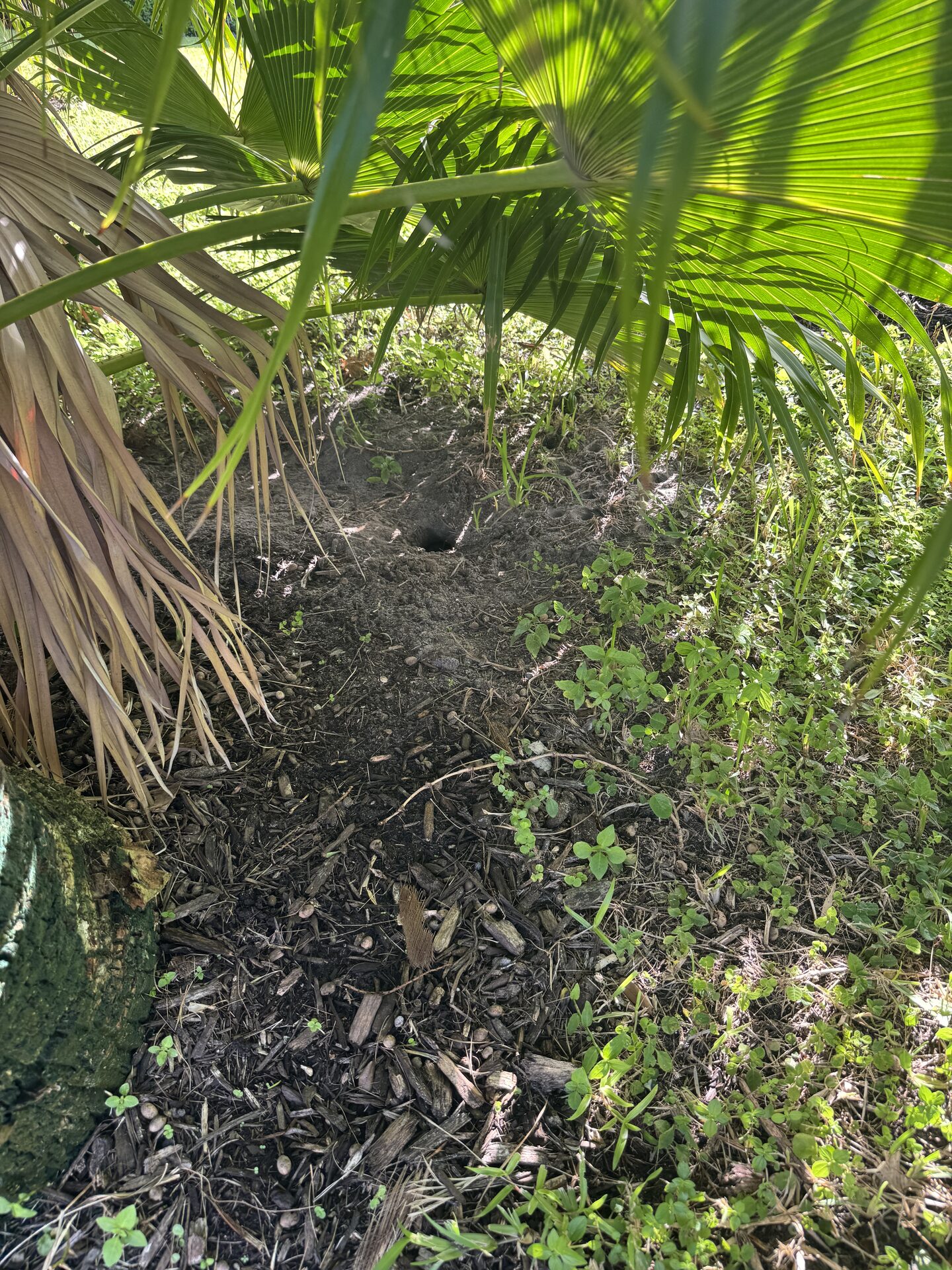
Iguana nesting season in Florida runs from December through April. During these months, female iguanas dig burrows to lay their eggs, and the signs are usually visible if you know what to look for. Spotting nesting activity early can prevent a small iguana problem from becoming a major infestation. Here is what to watch for on your property.
When Iguanas Nest in Florida
Iguana nesting season in Southwest Florida typically runs from December through April, with peak activity in March and April. During this period, female iguanas become more active as they search for suitable nesting sites. They prefer sunny, well-drained soil where they can dig deep enough to bury their eggs safely.
If you notice increased iguana activity during these months, especially near soil banks, landscaped areas, or seawalls, nesting is a likely cause. The earlier you detect nesting activity, the easier it is to address before eggs hatch and the population grows.
Signs of Iguana Nesting on Your Property
Several indicators can tell you if iguanas are nesting on your property. Look for these signs during nesting season:
- Freshly dug burrows in sunny soil: New burrows are the clearest sign. Look for holes in the ground with freshly excavated soil around the entrance. The soil is usually pushed out in a fan shape around the opening.
- Disturbed landscaping: Iguanas dig through mulch, flower beds, and soft soil to create nesting burrows. If you notice plants uprooted or soil scattered in landscaped areas, iguanas may be the cause.
- Visible iguana traffic patterns: Iguanas create worn paths between basking spots, feeding areas, and burrow entrances. If you see a repeated path through grass or landscaping, iguanas are using that route regularly.
- Increased male territorial behavior: During nesting season, male iguanas become more territorial and aggressive. You may see males displaying, bobbing their heads, or chasing other iguanas near nesting areas.
- Multiple iguanas in the same area: If you suddenly see several iguanas in one part of your property, it could mean a nesting site is nearby. Females return to the same nesting areas year after year.
Where to Look for Iguana Nests
Iguanas prefer specific locations for nesting. Focus your inspection on these areas:
- Lake banks and canal edges: Soft, sandy soil near water is ideal for burrowing. Check the banks of any lakes, ponds, or canals on your property.
- Landscaped berms: Raised areas with loose soil and full sun are prime nesting spots. Iguanas prefer warm, well-drained soil for egg development.
- Near seawalls: The base of seawalls often has sandy soil that is easy to dig. Iguanas frequently burrow under seawalls, which can cause structural damage over time.
- Sandy areas and open ground: Any exposed sandy or soft soil in a sunny location is a potential nesting site.
What an Iguana Nest Burrow Looks Like
An iguana nest burrow is not a shallow hole. The typical nesting burrow is about 1 foot deep and 3 feet long, with a single entrance. The entrance is usually 6 to 8 inches across, just large enough for an adult female to enter. Inside, the burrow widens into a chamber where the eggs are deposited.
The soil around the entrance is usually loose and freshly excavated. You may see drag marks or claw scratches near the opening. Unlike other animal burrows, iguana burrows tend to be in sunny, open areas rather than under thick cover.
Why Early Detection Matters
A single female iguana can lay 10 to 70 eggs per clutch, and iguanas can nest more than once per season. That means a few nesting females on your property can produce dozens of hatchlings in a single year. Those hatchlings grow quickly and return to the same area to nest when they reach maturity.
If you catch nesting activity early, you can remove the iguanas before eggs are laid or before hatchlings emerge. Once eggs are in the ground, the problem becomes harder to solve. Burrow remediation requires excavating the nest, removing the eggs, and backfilling the burrow to prevent reuse.
Early detection also prevents structural damage. Burrows under seawalls, walkways, and foundations undermine the soil and can cause cracking, settling, or collapse over time. The longer burrows go unaddressed, the more expensive the repairs become.
What to Do When You Spot Signs of Nesting
If you notice any of the signs described above, take these steps:
- Do not try to handle the iguana yourself. Iguanas bite and scratch, and Florida law requires humane, permitted removal.
- Photograph the burrows and any iguana activity. Documentation helps a professional assess the scope of the problem.
- Note the locations. Mark each burrow entrance so the removal team can find and remediate every site.
- Call a licensed professional. An FWC-permitted iguana removal service can trap the iguanas, excavate the nest burrows, and backfill them to prevent future nesting.
- Schedule ongoing suppression. Iguanas return to the same nesting areas year after year. Regular monitoring catches new arrivals before they establish nests.
Rocky's Cane Toad and Iguana Management provides iguana removal, burrow remediation, and ongoing suppression across Southwest Florida. Free property inspections. Call (239) 922-5992 to schedule yours. We serve Naples, Fort Myers, Cape Coral, Bonita Springs, Estero, Port Royal, Sanibel, and Captiva.
About the Author
Chris "Rocky" Rockwell
Owner
Rocky's Cane Toad and Iguana Management, LLC
Naples, FL
Frequently Asked Questions
When do iguanas nest in Florida?
Iguana nesting season in Florida runs from December through April, with peak activity in March and April. Female iguanas dig burrows during these months to lay their eggs in sunny, well-drained soil.
What do iguana nests look like?
An iguana nest burrow is about 1 foot deep and 3 feet long with a 6 to 8 inch entrance. Freshly excavated soil is usually pushed out in a fan shape around the opening. Burrows are typically in sunny, open areas near banks or seawalls.
How deep do iguana nest burrows go?
Iguana nest burrows are typically about 1 foot deep and 3 feet long. The burrow widens into a chamber where the female deposits her eggs. The depth provides insulation and protection for the developing eggs.
How many eggs does an iguana lay?
A single female iguana can lay 10 to 70 eggs per clutch, and may nest more than once per season. This means a few nesting females can produce dozens of hatchlings in a single year on your property.
What should I do if I find an iguana nest on my property?
Do not handle the iguana yourself. Photograph the burrows, note their locations, and call a licensed, FWC-permitted professional. They can trap the iguanas, excavate the nest, remove the eggs, and backfill the burrow to prevent future nesting.