
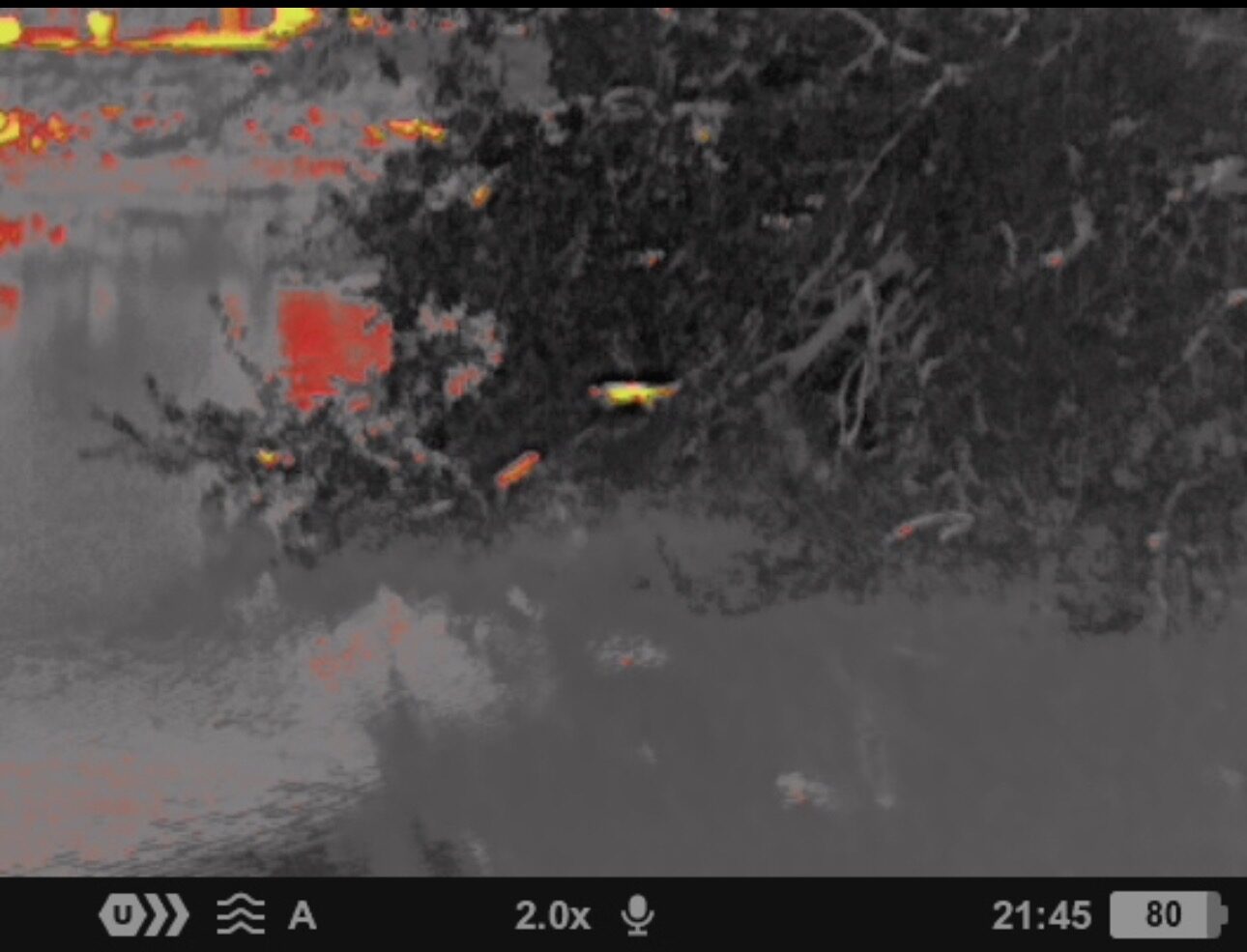
Finding iguanas on a property is not always easy. They hide in trees, burrow underground, and blend into dense vegetation. But iguanas have one weakness that Rocky's exploits: they are cold-blooded animals that give off a detectable heat signature. Using thermal imaging technology, Rocky's can locate iguanas that are invisible to the naked eye.
How Thermal Imaging Works for Iguana Detection
Green iguanas are ectothermic, meaning they rely on external heat sources to regulate their body temperature. They bask in the sun to warm up and retreat to shade or burrows to cool down. This constant temperature regulation creates a heat signature that thermal cameras can detect.
A thermal imaging camera captures infrared radiation (heat) rather than visible light. On a thermal image, warm objects appear bright (white, yellow, orange, or red) and cooler objects appear dark (purple or blue). Because iguanas absorb and retain heat from the sun, their bodies glow brightly on a thermal camera, even when they are hiding in trees, under thick foliage, or near structures.
Why Thermal Imaging Gives Rocky's an Advantage
Most iguana removal companies rely on visual spotting alone. They walk the property, look for iguanas on seawalls and in trees, and catch what they can see. The problem is that iguanas are excellent at hiding. They wedge themselves into tree canopies, tuck behind rooflines, and press flat against branches where their green coloration makes them nearly invisible.
Thermal imaging eliminates that advantage. On a thermal scan:
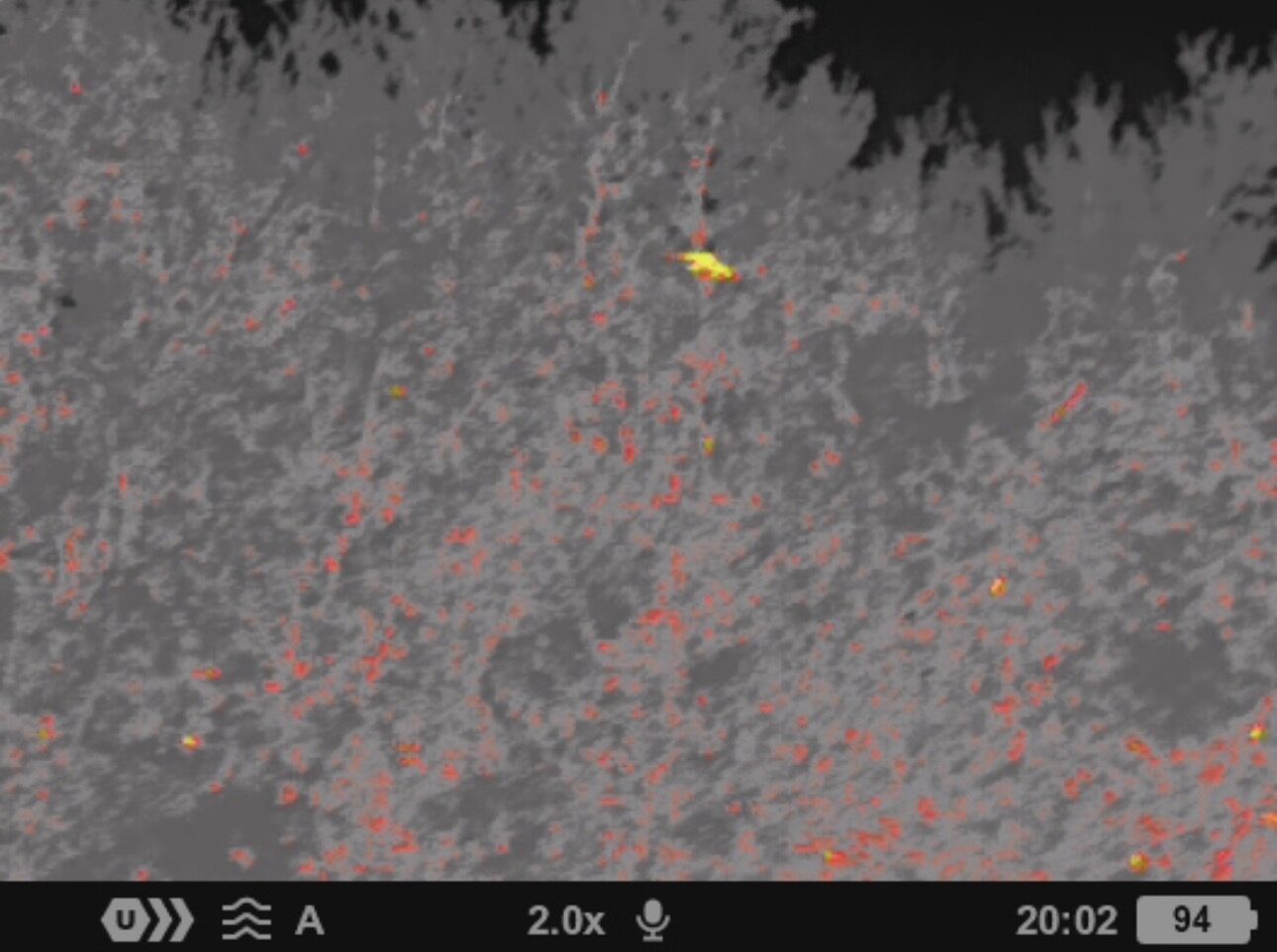
- Iguanas in tree canopies appear as bright heat signatures against the cooler background of leaves and branches
- Iguanas hiding behind structures show up as warm spots against cooler building materials
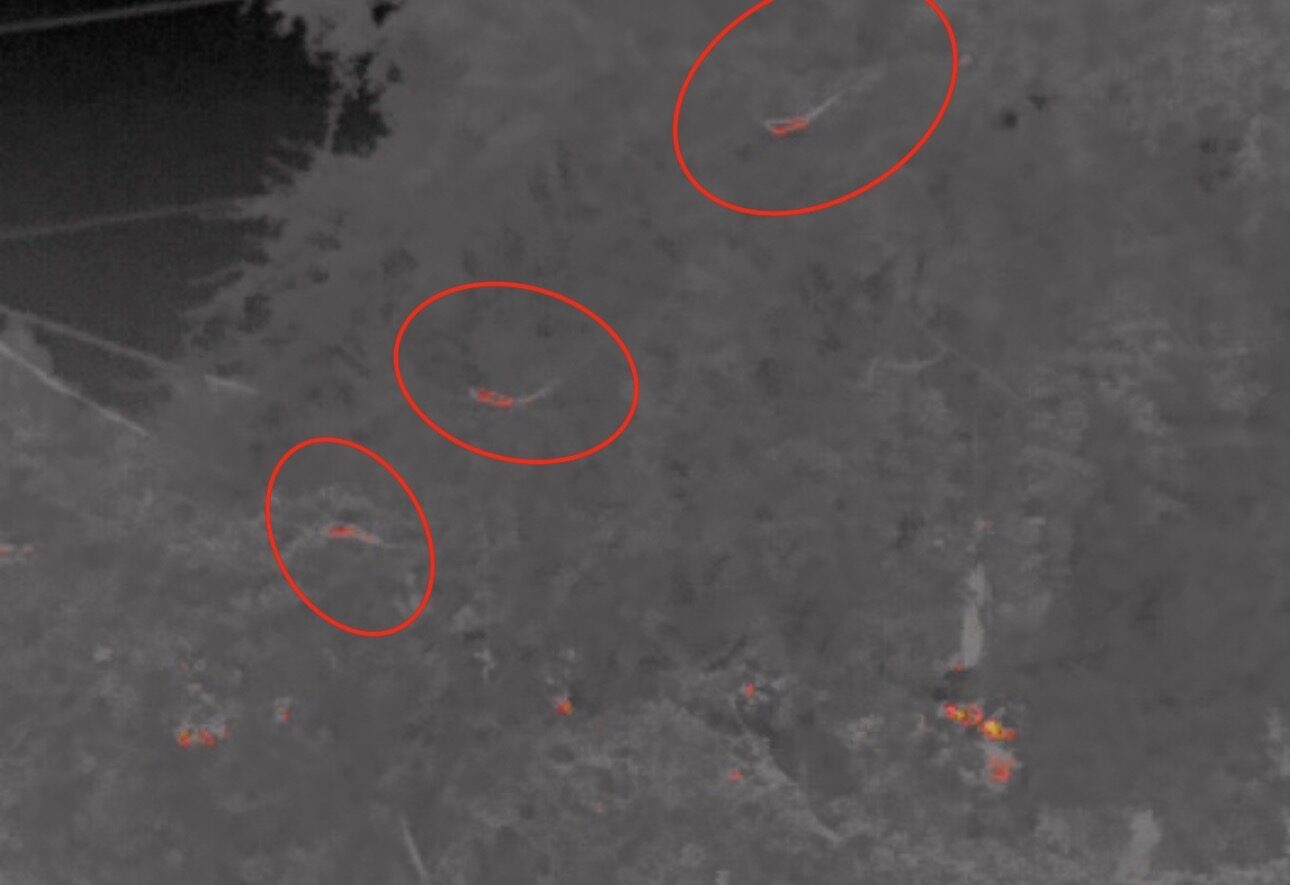
- Multiple iguanas in one tree are clearly visible as distinct heat sources, even when you cannot see them with your eyes
- Iguanas near burrow entrances can be detected at dawn or dusk when they are transitioning between burrow and basking spots
When Thermal Imaging Is Most Effective
Thermal imaging works best when there is a clear temperature contrast between the iguana and its surroundings. In Southwest Florida, this means:
- Early morning: Iguanas that basked in the afternoon sun the day before still retain some heat. The surrounding vegetation and structures have cooled overnight, making the iguana's heat signature stand out sharply.
- Dusk: As the air cools but iguanas retain body heat from the day, they glow brightly on thermal cameras. This is also when iguanas are moving to burrow entrances.
- Dense vegetation: Thermal imaging cuts through thick foliage where iguanas hide. You do not need to see the iguana with your eyes. The camera finds the heat.
- Large properties: On estates, golf courses, and HOA common areas where visually scanning every tree is impractical, thermal imaging lets us scan large areas quickly and identify exactly where iguanas are concentrated.
What This Means for Your Property
Thermal imaging means a more thorough removal. When Rocky's inspects your property, we do not just look for iguanas we can see. We scan for iguanas that are hiding, camouflaged, and waiting for us to leave. This is especially important for:
- Waterfront estates with mature trees and dense landscaping where iguanas blend in
- Golf courses where iguanas hide in tree canopies along fairways and near water hazards
- HOA communities with large common areas that need to be cleared efficiently
- Properties with recurring problems where iguanas keep coming back despite previous removal attempts
The Technology Difference
Most iguana removal companies in Southwest Florida do not use thermal imaging. They rely on visual spotting, which means they miss iguanas that are hiding. Those missed iguanas repopulate the property within weeks, and the homeowner calls them back for another round of removal that also misses the hidden iguanas.
Rocky's uses thermal imaging as part of a comprehensive removal strategy. We combine thermal detection with FWC-permitted capture methods (hand capture, noosing, trapping, and selective air rifle use), burrow remediation, and ongoing suppression. The thermal scan tells us exactly how many iguanas are on the property and where they are hiding, so our removal is complete, not partial.
See It for Yourself
The photos in this article are actual thermal images from Rocky's fieldwork in Southwest Florida. The bright spots are iguanas that would be nearly impossible to see with the naked eye but show up clearly on thermal imaging.
If you have iguanas on your property and want a removal service that uses the latest technology to find them all, call Rocky's at (239) 922-5992. Free property inspections. Serving Naples, Fort Myers, Cape Coral, Bonita Springs, Estero, Port Royal, Sanibel, and Captiva.